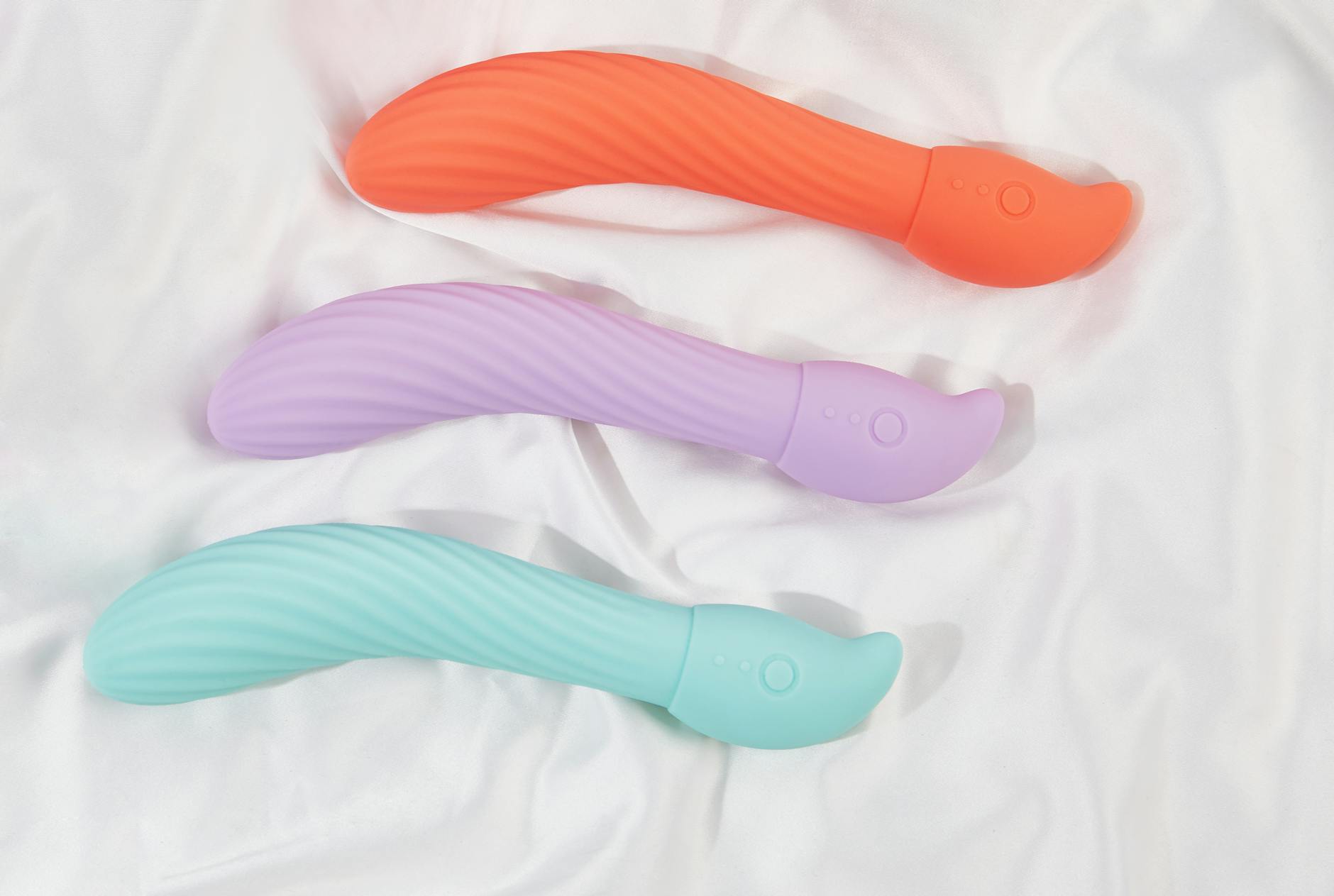
One partner gets there. The other doesn't. Or one person needs fifteen minutes of foreplay, and the other is ready in ninety seconds. Or one person comes once reliably, and the other person comes three times or not at all. Pleasure asymmetry in relationships is so common that I'd argue it's almost the norm. And almost nobody talks about it.
The shame makes it invisible. So does the habit of framing sex as "it was good" or "it wasn't," instead of asking the actual question: "Good for whom?" This is where lemon vibrators and suction toys change the equation entirely. Not by fixing anyone. By making pleasure a shared project instead of a performance.
Bodies are wildly different. Response time, sensitivity, orgasm pattern, arousal triggers. Research on couples sexuality shows that orgasmic timing matches in roughly 30% of partnered sex. That means 70% of people are managing some degree of asymmetry.
Add to that the psychological layer: anxiety, attention, history, attachment style. One person might be focused entirely on their partner's pleasure, which means they're not in their own body. Another person might carry decades of shame that makes relaxation feel impossible. Someone else might have medication side effects or hormonal fluctuations that shift everything month to month.
None of this means the relationship is broken. It means you're human.
A lemon clitoral vibrator like the Lem works because it addresses the core friction point: timing. Instead of waiting for one person to arrive at arousal, or one person faking orgasm so the other doesn't feel rejected, you're adding a tool that lets both people access pleasure simultaneously.
Here's the mechanics: if your partner needs longer to warm up or climax, a lemon vibrator gives you something to do that isn't just waiting. And it gives them pressure-free access to their own body without the clock ticking based on penetration or your stamina.
Suction toys like this one work particularly well for asymmetry because they stimulate the clitoral complex in a way that doesn't require matching anyone's thrust pattern or rhythm. You can use it for five minutes or fifty. It doesn't get tired. It doesn't perform.
Before you introduce any toy, you need to name the thing. Not in a vulnerable-breakdown way. Just practically.
"I've noticed that our bodies respond on different timelines. I think that's totally normal, and I also think we could make it easier on ourselves. Can we talk about what that would look like?"
That's it. That's the opener. Then listen. Your partner might say, "I feel like I'm always keeping you waiting," or "I feel pressured to hurry," or "I genuinely don't know what I like." None of those are character flaws. They're starting points.
This conversation also gives you permission to ask the actual question you probably never have: "What would feel good to you? Like, if you had a magic wand, what would be different?" You might be shocked at the answer. Many people have never been asked this directly.
Don't frame it as a problem-solver. Frame it as an expansion.
"I found this toy that's supposed to feel incredible. Want to try it together?" That's it. No preamble about your sex life being broken. No performance anxiety wrapped in plastic.
When you use it together, start with context you both understand. Maybe you're already in foreplay. Maybe you've both showered. Maybe you're on a Saturday morning when you have time and aren't exhausted. Timing matters more than people admit.
Start with lower intensity settings on the Lem (patterns 1-3). You're exploring, not chasing an outcome. If your partner is doing penetrative work, they can use the vibrator on their vulva simultaneously. If you're taking turns, they can use it on themselves while you touch them elsewhere. If you're just watching, that's okay too.
The goal is not synchronized orgasm. The goal is: "I'm having pleasure, you're having pleasure, and we're together." That's the whole thing.
Sometimes asymmetry isn't about timing. It's about strength. One person needs intense stimulation to feel anything. Another person finds it painful. A lemon clitoral vibrator handles this better than most toys because suction gives you a wider range of sensation options. You can dial the suction level, the pattern, and the exact placement.
If your partner is sensitive and you need intensity, you're not at odds anymore. You're each using the tool that works for your body.
When you introduce a toy, you're also introducing a moment where both people have to acknowledge: "My pleasure matters enough to talk about." That's terrifying for a lot of people, especially if they grew up with messaging that their desire was shameful or that good sex should be "natural" and not require tools.
If your partner resists the idea, it's usually not about the toy. It's about the vulnerability. Go slow. You might say, "I want us both to feel good. I don't think that's weakness. I think that's smart." Then give them space to sit with that.
Once you're using a lemon vibrator together, the conversation doesn't stop. It actually deepens.
"Does this pressure feel good?" "Do you want me to switch patterns?" "Is this the right moment?" "What do you need from me right now?" These aren't mood-killers. They're the opposite. They're how you stop performing and start connecting.
Many couples discover that the toy becomes a language they never had before. Instead of guessing, you're asking. Instead of faking, you're honest. That's a complete reframe from asymmetry being a shameful secret to asymmetry being just data you're working with together.
If one partner consistently wants sex and the other consistently doesn't, that's not an asymmetry problem. That's a mismatch in desire that might benefit from couples therapy. A lemon vibrator can enhance pleasure, but it can't manufacture desire that isn't there.
If one partner is experiencing pain during sex, see a pelvic floor physical therapist or a gynecologist. Again, a tool can help manage the experience, but pain is information that something needs attention.
If communication about pleasure feels impossible, a sex-positive therapist can teach you the language and the safety to have those conversations. That's not a relationship failure. That's good maintenance.
Once couples start using lemon vibrators and talking about asymmetry directly, I see three shifts:
First, the shame lifts. You're no longer pretending the experience is identical for both people. You're accepting reality and working with it. That's adult.
Second, pleasure increases. For both people. Because you're not splitting your attention between your own sensation and managing your partner's experience. You can actually relax into your body.
Third, intimacy deepens. Because you've moved from "good sex" being a performance metric to it being a shared project. You're on the same team.
Asymmetry doesn't stay static. Your body changes. Your medication changes. Your stress level changes. Your desire fluctuates. What worked last year might not work this year. This is why the conversation matters more than the toy.
A lemon vibrator is a tool that says, "Your pleasure is worth our attention." Use it as an invitation to check in with your partner regularly, not just during sex. "How are you feeling about us physically?" "Is there something you've been wanting to try?" "What's changed since last month?" These questions keep you in sync as bodies and brains evolve.
You don't need perfect symmetry. You need willingness to keep looking at each other and asking: "What do you need?" If you have that, the rest is just logistics. And logistics are solvable.
This is the most common concern. The truth: a toy isn't a replacement. It's an amplifier. It's saying, "Your pleasure matters so much that I want to expand the tools we use." You might also reframe it: "This isn't about you failing. This is about us both getting more of what we want." If your partner is struggling with this emotionally, that conversation might need a therapist's help.
Absolutely. Sometimes the toy is the conversation starter. It gives you permission to talk about pleasure without it feeling abstract. You're not discussing "our intimacy." You're discussing, "How does this pattern feel?" That's practical and less loaded.
This is where you need to separate the activities. Instead of "sex" being one synchronized event, you're saying, "I want to keep going. Want to use the lemon vibrator together?" Or, "I'm going to use this while you rest." You're destigmatizing the idea that pleasure might have different durations and that's fine.
No. Use it when it serves you both. Sometimes it's a regular thing. Sometimes it's occasional. Sometimes one of you uses it alone and that's part of your intimacy. There's no rulebook. You're making this up as you go.
Most people feel awkward the first time. That's normal. You might laugh. You might feel silly. That's actually the moment where shame starts to crack. The second and third time usually feel less weird. By the fifth time, it's just part of what you do together.
You ask. "I want to make sure you actually want to try this, not just doing it for me. How do you actually feel about it?" Then listen to the answer. If it's hesitant, slow down. If it's genuinely interested, proceed. Consent isn't a one-time yes. It's an ongoing check-in.
Asymmetry isn't a relationship problem. It's a relationship reality. The couples who handle it best aren't the ones with perfectly matched bodies. They're the ones who decided that both people's pleasure mattered enough to talk about it, plan for it, and use the right tools.
A lemon vibrator does one simple thing: it lets you both be in your own bodies at the same time. Everything else is just honest conversation. And that's the thing that actually heals the gap.
If you're ready to have that conversation, I'd love to help you think through what you want to say. Reach out anytime at /contact.