Here's what they don't tell you at the IUD insertion clinic
A hormonal IUD is one of the most reliable birth control methods available. It's also a small device that releases synthetic progestin directly into your system, shifting the way your entire body responds to pleasure. Most people know the first part. Almost nobody talks about the second.
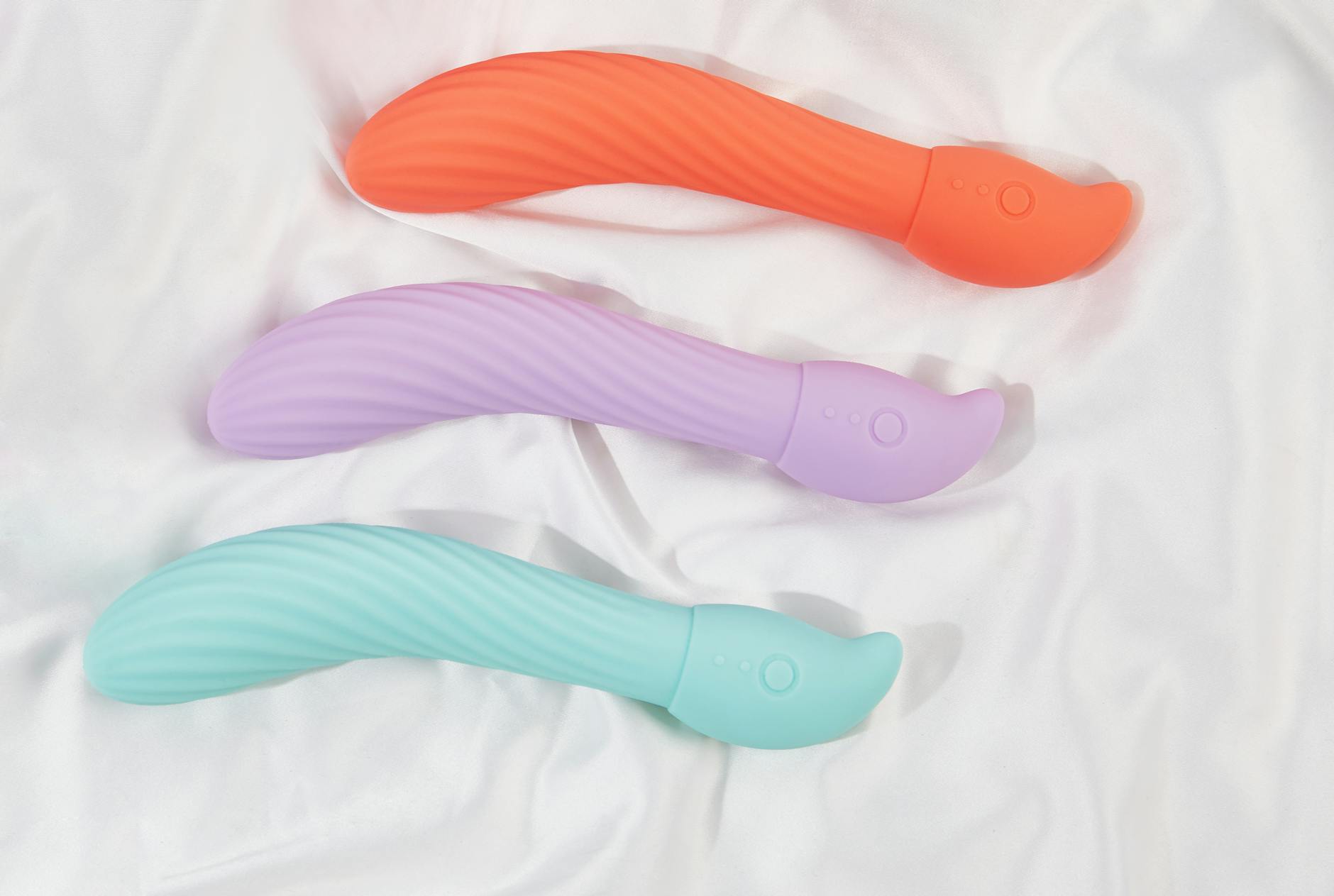
The sensation changes are real. They're also fixable. A lemon clitoral vibrator, particularly something like the Lem with its gentle suction action, becomes your best tool for bridging that gap between where you used to feel and where you are now.
What a hormonal IUD actually does to your clitoris
Let's start with the biology. A hormonal IUD releases a synthetic progestin called levonorgestrel. This hormone thickens cervical mucus, thins the uterine lining, and suppresses ovulation. But it also travels through your bloodstream, affecting hormone receptors everywhere in your body. Your clitoris has dense hormone receptors. So does the tissue surrounding it.
Progestin shifts two things that matter for pleasure. First, it can reduce blood flow to genital tissue. This doesn't happen to everyone, but it happens often enough that it's a documented side effect in clinical literature and fertility forums alike. Less blood flow means less engorgement, which means less sensitivity.
Second, progestin can dull the neural response to touch. It's not that your nerves stop working. It's that the signal between your skin and your brain gets quieter. Imagine turning the volume down on a song you love. The song is still playing. You just can't hear it as clearly.
Third, and this matters most for positioning and toy choice, progestin can change the way your clitoris swells during arousal. For some people, the clitoral head becomes less prominent, less easy to target with direct pressure. This is why the Lem's suction mechanism outperforms traditional vibrators for post-IUD pleasure. Suction works differently.
Why suction beats vibration when hormones shift sensitivity
A traditional vibrator, even a powerful one, relies on direct mechanical pressure and friction. If your clitoral tissue is less engorged, if it's sitting lower or more retracted, direct pressure can feel ineffective or even painful.
Suction works on a different principle entirely. Instead of vibrating against tissue, it gently pulls. This creates a sensation of fullness and arousal that doesn't depend on your clitoris being highly engorged. The Lem's gentle pulse mimics the biological sensation of oral sex without the intensity that can feel abrasive when sensation is muted.
Here's what clients often report in the first few weeks after switching from a standard vibrator to a lemon sucker: the sensation builds faster, reaches higher, and feels more natural. That's because suction stimulates a broader area of nerve tissue rather than targeting one specific point. When your clitoris is less pronounced, broader stimulation works better.
The arousal timeline shift you'll notice
Hormonal IUDs don't just change sensation. They change the pace of arousal. Many people find that the time between "not interested" and "fully turned on" stretches. What used to take 5 to 10 minutes now takes 15 to 20. This is particularly true in the first 3 to 6 months after insertion, though some people experience it ongoing.
Budget more time for foreplay. This sounds obvious, but it's worth saying because many people assume something is wrong with them, not recognizing that their hormones have shifted the timeline. They're not broken. They're just operating at a different rhythm now.
With a lemon vibrator, use the first 5 to 10 minutes on lower settings. Pattern 1 or 2 on the Lem is perfect for this. You're not trying to reach orgasm yet. You're building baseline arousal, letting your body remember what pleasure feels like. Once you feel engagement (a subtle warmth, some engorgement), step up to pattern 3 or 4. The progression matters more than the starting intensity.
Positioning changes that make the biggest difference
Because progestin can change clitoral positioning, the angle at which you use your toy shifts. If you were always flat against your clitoris before, you might find that slightly off to the side, or with the Lem angled toward the clitoral hood rather than the head directly, feels far more effective.
Experiment in small increments. Move the toy a quarter inch. Wait 10 seconds. Notice what changes. Your body will tell you where it wants stimulation now. This is not the same information it gave you three months ago, and that's completely normal.
Many people also find that building arousal with a partner's hand or mouth first, before introducing the lemon vibrator, creates better results. You're essentially priming the tissue, bringing blood flow to the area, making the toy's job easier. This is true for everyone, but it becomes especially valuable when hormonal shifts have muted sensitivity.
Lubrication becomes non-negotiable
Hormonal IUDs can reduce natural lubrication. This is separate from sensation changes, but it works alongside them. Even if you feel aroused, you might produce less fluid than before.
Use water-based lubricant every time you use the Lem. This is not a sign of failure. It's adjustment. Lube reduces friction, which matters when your tissue is more delicate, and it also increases the effectiveness of suction by creating a better seal between the toy and your skin.
Reapply during longer sessions. If you're spending 20 to 30 minutes with the toy, add more lube halfway through. Your natural response might not catch up to your toy's pace anymore, and that's okay.
When to talk to your doctor about hormone levels
Some people experience mild sensation changes from an IUD. Others experience dramatic ones. If your sensation hasn't returned to baseline after six months, or if you're experiencing pain alongside numbness, check in with your gynecologist.
A few questions that matter: Did your sensitivity shift drop immediately after insertion, or gradually? Is it only during sexual activity, or is it affecting daily sensation too? Have you experienced other mood or energy shifts that suggest the hormone dose is particularly high for your body?
Your doctor can check whether you're a candidate for a lower-hormone IUD, or whether adding a progestin-balancing supplement like vitex might help. In some cases, people switch from the hormonal Mirena to the copper Paragard and find sensation returns within weeks. In other cases, the IUD isn't the culprit at all, and other factors are at play.
Don't assume you're stuck. You have options.
Rebuilding sensation takes time, not pressure
The worst thing you can do right now is push. If you've lost sensation and you're frustrated, the urge is to crank up intensity, to chase the feeling the way you used to. This backfires. Sensitivity returns when you approach your body with curiosity and patience, not desperation.
Use the Lem on lower patterns for longer stretches. Explore what feels good instead of what used to feel good. Some people find that taking a break from toys altogether for a few weeks, focusing on partner touch or manual stimulation, helps reset the nervous system. Then reintroducing a lemon clitoral vibrator feels revelatory.
Your pleasure hasn't disappeared. The pathway to it has just shifted. The Lem's gentle suction approach works with that shift instead of against it.
FAQ
How long does it take for sensation to return after a hormonal IUD?
For most people, baseline sensitivity returns within 3 to 6 months. For some, it takes a year. And for a small number, it never fully returns to pre-IUD levels, even though pleasure remains absolutely achievable with adjusted technique and tools. This variation is normal. Every body processes synthetic progestin differently. If you're six months in and seeing no improvement, that's worth discussing with your gynecologist.
Can I use a regular vibrator or do I need a lemon sucker specifically?
You can use any toy. But a lemon vibrator, with its suction mechanism, tends to work better because it doesn't rely on your clitoris being highly engorged to create sensation. Traditional vibrators work best when tissue is plump and reactive. Suction works when tissue is less pronounced. That said, some people find that a powerful wand vibrator set to very low intensity works fine for them. You won't know until you try. If you have a traditional vibrator already, experiment with lower settings and angled positioning before investing in a new tool.
Is reduced sensation from a hormonal IUD permanent?
No. For the vast majority of people, sensation returns once the IUD is removed or once their body adjusts to hormone levels. Some people find that sensation returns within months of insertion as their body acclimates. Others remove the IUD and feel immediate change. A tiny percentage of people report that sensitivity never fully normalizes, but they still experience orgasm and pleasure with adjusted technique. This is not inevitable. Most bodies adapt.
Does increasing the hormone dose in my IUD make sensation worse?
The Mirena IUD releases hormone continuously. Some newer options like the Kyleena and Skyla release lower doses. If you're experiencing significant sensation loss, your doctor can discuss switching to a lower-dose option. This sometimes helps, particularly if you're also experiencing mood changes, fatigue, or other progestin side effects. Everyone has a different threshold for how much synthetic hormone their body can process comfortably.
Should I remove my IUD if I'm losing sensation during sex?
Not necessarily. First, give it time. Sensation often returns as your body adjusts. Second, try adjusted technique and tools like a lemon sucker before making that decision. Third, have a conversation with your gynecologist about what other factors might be involved. Relationship stress, medication side effects, or decreased overall arousal can mimic or worsen IUD-related sensation loss. Once you've ruled out those variables, then you can make an informed choice about whether the IUD is right for you long-term.
Can I use the Lem on the highest setting right away to compensate for numbness?
No. This usually makes things worse. When sensation is muted, aggressive stimulation can feel uncomfortable rather than pleasurable. Start low and build. Your nervous system needs time to reconnect, and that happens through patience and gradual escalation, not through forcing intensity. If you blast the highest setting on a numb clitoris, you risk creating an association between the Lem and discomfort instead of pleasure. Go slow.
You don't have to choose between contraception and pleasure
A hormonal IUD is a gift in many ways. It's also a trade-off. The good news is that the trade-off isn't permanent, and it's not insurmountable. Your pleasure doesn't disappear because your hormone levels shifted. It just needs different conditions to flourish.
A lemon clitoral vibrator is built for exactly these conditions. The Lem's suction design works with reduced sensation instead of against it. Pair it with patience, better timing, and a willingness to explore what feels good right now instead of what felt good three months ago, and you'll find your way back to satisfaction.
Your body is not broken. It's just adapting. Give it time.