Let's name what's actually happening
Trauma rewires how your body experiences touch. Not forever. But for right now, sensation feels different, trust feels fragile, and pleasure might feel impossible or even dangerous. That's not broken. That's a nervous system that learned to protect you.
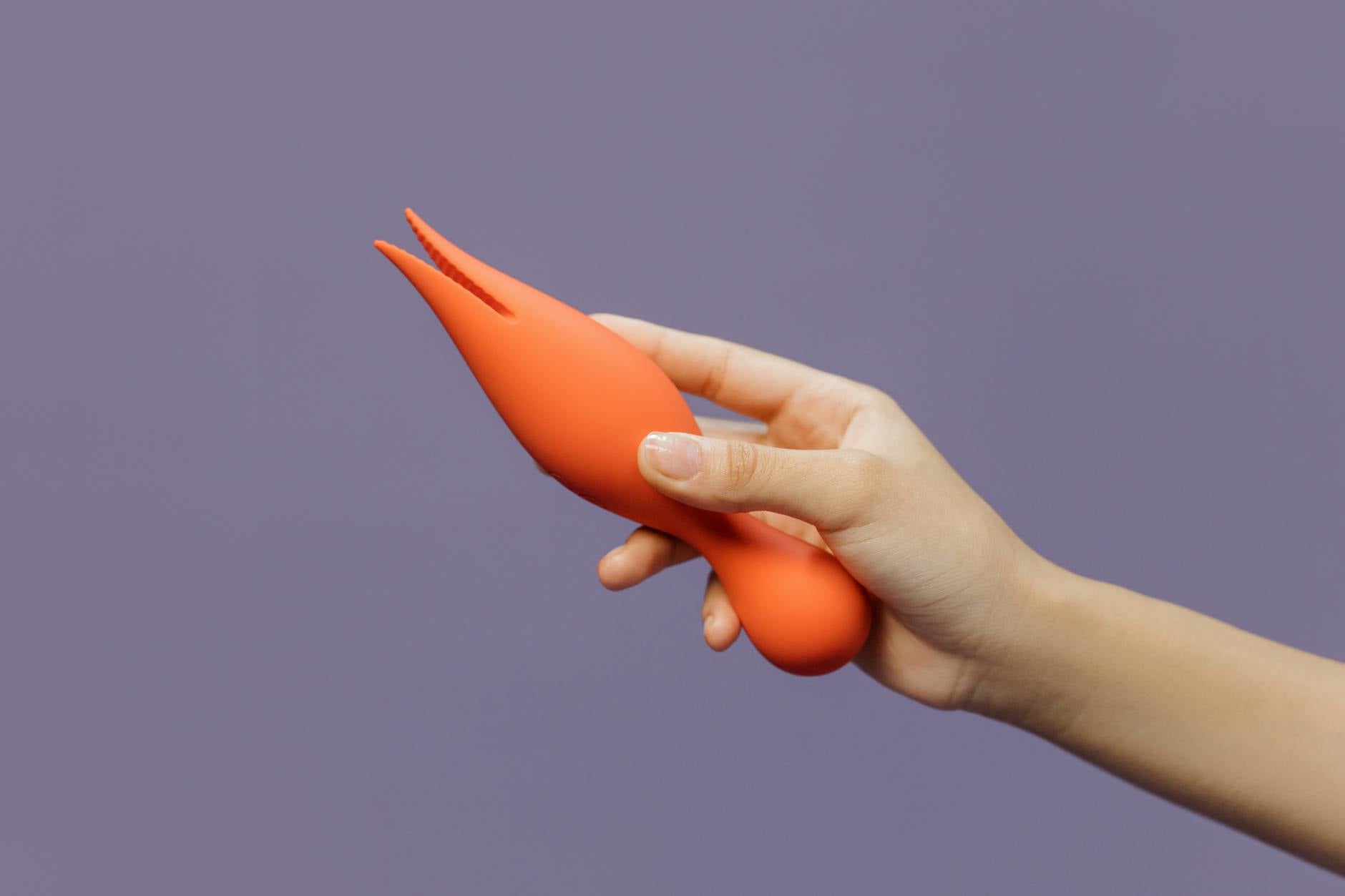
The thing nobody tells you is that rebuilding pleasure isn't about pushing harder or feeling guiltier. It's about creating conditions where your nervous system feels safe enough to want sensation again. A lemon vibrator, used mindfully, can be part of that conversation with your body.
Why air-suction changes the equation for trauma recovery
Here's the part that matters: traditional vibrators deliver direct, predictable stimulation. For people rebuilding after trauma, that predictability can feel good. But the suction mechanism of lemon clitoral vibrators works differently. It's gentler at lower settings, doesn't require sustained pressure, and the pattern changes mean your nervous system isn't bracing for the same sensation over and over.
That variety matters. When trauma has taught your body to anticipate pain or violation, repetitive sensation can trigger freeze responses. Suction stimulation that shifts and releases gives you something closer to what your body is trying to learn: that pleasure doesn't have to hurt, that sensation can change, that you can choose when it stops.
Most importantly, a lemon vibrator puts the control entirely in your hands. You set the pattern. You set the pace. You can stop in a second.
The three conditions that make sensation possible again
Condition 1: Absolute privacy and permission.
You need time alone where nobody can interrupt, nobody is waiting, and you have zero reason to rush. Trauma survivors often live in a state of hypervigilance. Your nervous system is watching the door, listening for footsteps, bracing for what's next. Pleasure requires the opposite. Budget at least 30 minutes where you're not expecting anything from yourself except to notice what feels okay.
Condition 2: Starting outside the body.
Most trauma survivors need to rebuild sensation gradually. I recommend starting with the lemon vibrator on your inner arm, your thigh, your neck. Let your nervous system register: this is just sensation. This doesn't require anything from me. I can turn it off anytime. After several sessions of this, move closer to the vulva, but not on it yet. Let anticipation build on your terms.
Condition 3: A clear exit strategy.
Before you even turn on the device, know your stop signals. A word you'll say aloud if you need to pause. A hand gesture. A timer that reminds you this has a beginning and an end. Trauma often erases the boundary between your body and what happened to it. Rebuilding pleasure means rebuilding the belief that your boundaries work.
How to structure your first sessions
Session one: Hold the lemon vibrator, turned off. Feel the weight, the texture. Get used to it as an object in your hand, not a threat. You're building familiarity.
Session two: Turn it on at pattern one or two. Hold it somewhere neutral. Your forearm. Your calf. Let the sensation register without expectation. You're teaching your nervous system: vibration exists, I tolerate it, nothing bad happens.
Session three: Move the vibrator closer to the vulva. Inner thigh. Outer labia. Not the clitoris yet. You're mapping zones that feel safe.
Session four (or weeks four, depending on your pace): If session three felt good, try very light contact on the clitoris at the lowest setting. Three to five seconds. Then off. Rest. Breathe. You're not chasing an orgasm. You're rebuilding the idea that your body can be a source of pleasure, not just a place something happened.
There is no timeline here. Some people move through these in weeks. Others take months. Both are exactly right.
The role of pleasure vs. orgasm in early recovery
Here's where a lot of well-meaning advice goes sideways. People tell trauma survivors "Don't pressure yourself to orgasm" as if the two are somehow different challenges. They're not the same challenge at all.
Orgasm is a reflex. Pleasure is a choice your nervous system makes when it feels safe. Right now, your nervous system isn't making that choice yet, and that's not laziness. That's intelligence.
Use the lemon vibrator for sensation exploration, not orgasm achievement. Notice where your body wakes up. Which patterns feel interesting versus triggering. Whether five minutes feels good or exhausting. Whether you want more sensation or less. You're not training your body to do something. You're interviewing it.
Many people find their first genuine pleasure responses come not from the vibrator itself, but from the ritual around it. The privacy. The permission. The knowledge that they chose this. Your body might respond more to the tea you made beforehand, the music, the fact that you locked the door, than to the device itself.
That's still healing. That still counts.
When to loop in a partner (or whether to at all)
If you're rebuilding in a relationship, partner involvement is optional, not mandatory. Some people heal faster alone. Some people heal faster with a trusted partner present. Some people need to fully reclaim their own pleasure before they can share it.
If you do want to involve a partner, the conversation comes first. Not during. "I'm rebuilding my relationship with pleasure. I might want you present sometimes. Here's what that looks like. If I freeze or feel unsafe, you'll pause and check in. You won't try to convince me to continue." That clarity turns a partner into a support system instead of a variable in an already-fragile process.
Most importantly: your partner doesn't get to touch the lemon vibrator yet. This is your tool. Your rediscovery. You control when they're involved, and you can uninvolve them anytime.
Signs you're ready to deepen the practice
You're noticing sensation without bracing against it. You're turning the vibrator on without scanning for danger. You're moving through patterns without a sense of desperation. Your body is relaxing instead of tensing.
That's not permission to jump to the hardest settings or longest sessions. That's permission to experiment within the same careful framework. Maybe you try pattern three instead of pattern one. Maybe you go for seven minutes instead of five. Maybe you add a second session in a week.
The shift happens when your nervous system stops asking "Is this safe?" and starts asking "Is this interesting?" That's the moment pleasure is actually returning.
When professional support matters
If you're using a lemon vibrator and finding yourself disassociating, having flashbacks, or going completely numb, that's not a sign you're broken. That's a sign your nervous system needs more support than a device can provide.
A trauma-informed therapist, especially one trained in somatic practices, can help your body release the protective patterns that make pleasure impossible. EMDR, somatic experiencing, and polyvagal-informed approaches specifically help reregulate nervous systems after trauma. Many people find that a few sessions of therapy alongside the gentle rebuilding work with a vibrator accelerates healing significantly.
You're not weak for needing that support. You're wise for recognizing when you need more than self-care.
The long game
Sexual trauma doesn't just affect sex. It affects the belief that your body belongs to you. Rebuilding pleasure, even slowly, with a tool like a lemon vibrator that puts complete control in your hands, is an act of reclamation. Your nervous system learns: I choose this. I can stop this. My pleasure matters. My boundaries work.
That's not a small thing. That's the foundation for everything that comes next.
People also ask
Can you use a lemon vibrator after sexual assault?
Yes, but only when you're ready and at your own pace. Many trauma survivors find clitoral vibrators helpful during recovery because the control stays entirely with you. Start slowly, outside the body, and move toward direct genital contact only when that feels safe. If at any point you feel triggered or unsafe, stop immediately. There's no rush. A trauma-informed therapist can help you decide if now is the right time.
How long does it typically take to rebuild sexual sensation after trauma?
There's no fixed timeline. Some people rebuild interest and sensation in weeks. Others take months or years. Your pace isn't slow or fast. It's your pace. Healing isn't linear either. You might have sessions that feel great followed by sessions where you feel completely numb again. Both are part of recovery. The direction matters more than the speed.
What if using a vibrator triggers a flashback or panic response?
Stop immediately. Turn off the device, set it aside, and ground yourself using a technique your therapist recommended (cold water on your face, naming five things you can see, focused breathing). This isn't failure. This is your nervous system communicating important information. Take a break, maybe a few weeks, and consider working with a trauma-informed therapist before trying again. Somatic approaches can help your body process the response.
Can using a lemon vibrator help with dissociation during sex?
For some people, yes. The novelty and control of suction stimulation can anchor attention back to the present moment and your body. But if you're regularly disassociating during sexual activity, that's a sign your nervous system needs professional support. A trauma-informed sex therapist or somatic practitioner can help you understand why dissociation is happening and retrain your capacity to stay present.
Is it better to explore alone or with a partner during recovery?
Alone, initially. Rebuilding your relationship with your own body and pleasure works best without the variable of another person's energy or expectations in the room. Once you've established that sensation is possible and your body responds to pleasure without threat, involving a partner (if you want to) becomes a choice from a place of strength, not desperation. Some people never need or want to involve a partner. That's equally valid.
What settings should I use on a lemon clitoral vibrator if I'm just starting out?
Always start at the lowest pattern and intensity available. On most lemon adult toys, that's pattern one at the gentlest suction. You're not trying to feel a lot. You're trying to feel something safely. Work up to higher patterns only after multiple sessions at lower settings feel comfortable and good. Your body will tell you when it's ready for more.
Moving forward
Trauma doesn't end your capacity for pleasure. It interrupts it. Using a lemon vibrator during recovery is one way to have a conversation with your body that says: you're safe now, pleasure is possible, and the choice is yours. That conversation might take time. It might not always go smoothly. But it's worth having.
If you need support navigating this journey, whether with a therapist, a trusted partner, or just clarity on what healing could look like for you, we're here. <a href="/contact">Reach out anytime</a>.