Here's what nobody tells you about refractory periods
Your body isn't broken. You're not mismatched. You're just operating on different biological timelines, and that gap is the source of more couple friction than most people admit out loud.
After orgasm, the body enters a refractory period. That's the time it takes before another orgasm feels possible. For some people, that's two to three minutes. For others, it's twenty to forty. There's no universal standard, and it shifts across your lifetime. This isn't a failure of desire or technique. It's physiology.
When one partner can cycle back into arousal while the other is still cooling down, you get a mismatch. The faster partner feels rejected. The slower partner feels pressured. Both feel stuck. A lemon clitoral vibrator solves this specific problem because it creates independent pleasure that doesn't require your partner's body to be in sync with yours.
Why refractory periods are wildly different between partners
Biology hands out refractory periods unevenly. People with penises typically have longer refractory periods. After orgasm, there's a neurological reset that can take five to thirty minutes before erection and arousal return. People with vulvas have more variable refractory periods. Some can orgasm again within seconds. Others need ten or fifteen minutes. Hormones, age, medication, stress, and how recently you've been intimate all shift the timeline.
Psychologically, refractory differences create a weird power dynamic. The person who recovers faster might feel rejected when their partner isn't ready. The person who needs more time might feel pressured, which actually makes recovery longer. Both feelings are valid. Both make the gap wider.
Here's the thing: conventional sex typically requires both partners to stay engaged until both are satisfied. That means the slower partner sets the pace. The faster partner waits, which can feel like stalling. Or the slower partner rushes, which kills pleasure. Neither works.
How a lemon vibrator changes the equation
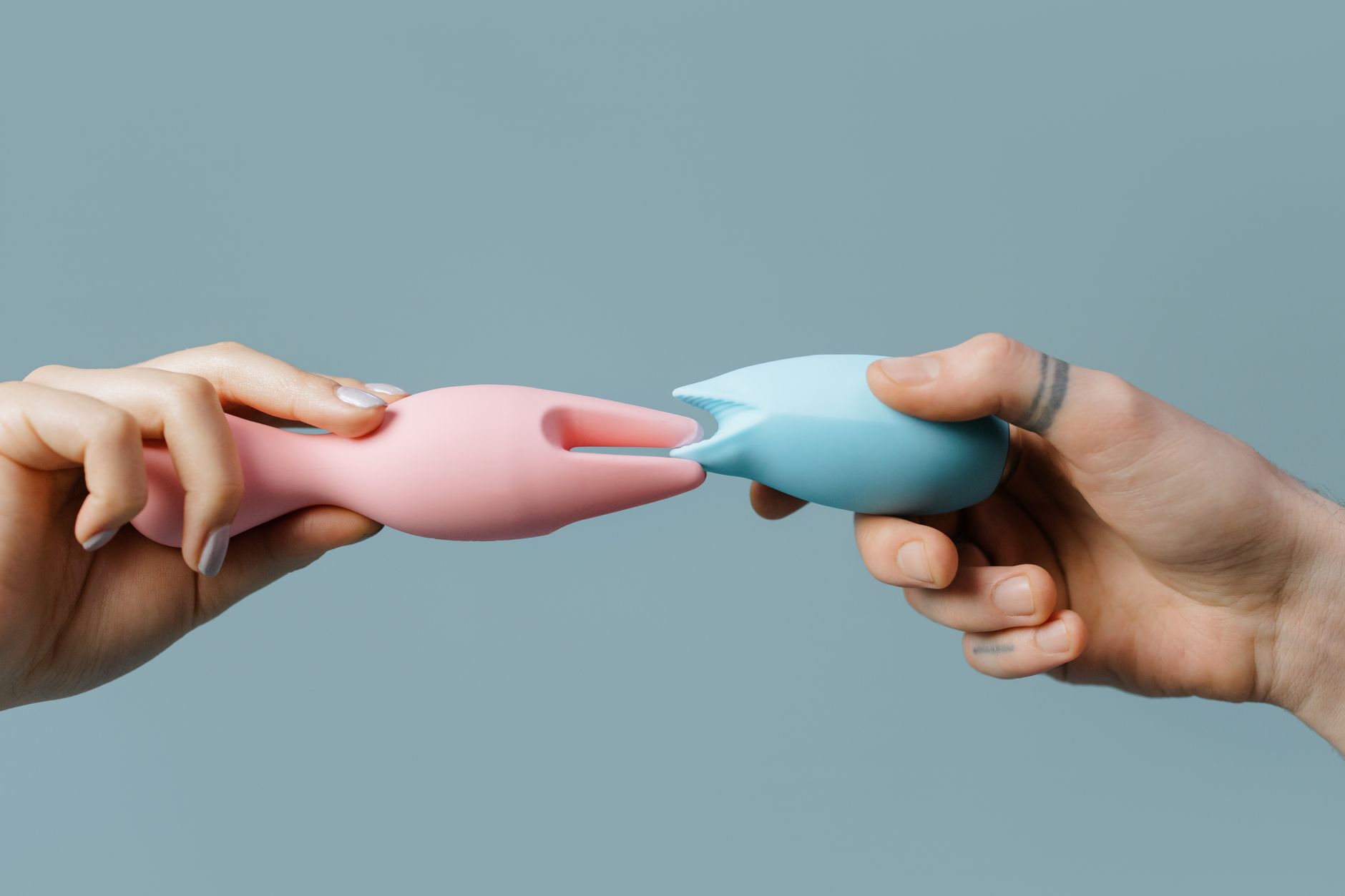
A clitoral vibrator like the Lemon gives you a third option: parallel pleasure instead of coordinated pleasure.
Once your partner has orgasmed, they can stay connected to you without being inside you or performing. You can use the vibrator on yourself, building toward your own orgasm, while they recover. They're present. They're touching you. They're watching. They're just not driving the whole experience with their body.
This works better than you'd think because presence and touch matter more than motion for the partner who's watching. When someone is feeling your pleasure directly, watching your body respond, touching you while you use the vibrator, they're engaged in a way that feels connected, not passive.
For the faster partner, this solves the restlessness. You're not lying there waiting for your partner to decide if they're ready. You have something to do. Something that actually feels good.
For the slower partner, the pressure lifts. You can take the time you need. You can focus on your own sensation. You can let your partner pleasure you without the sense of clock-watching.
The practical setup that actually works
Timing matters. Wait about thirty seconds after your partner orgasms before you introduce the vibrator. Not immediately. That actually extends refractory time because the body is still flooded with neurochemicals. Let them breathe. Let them enjoy the residual pleasure.
Then pivot. Move to a position where you're still close but they don't have to perform. Side-by-side works. So does you on your back with them alongside you, one hand on your chest or inner thigh, watching.
Start with the vibrator on a lower setting. If they're recovering, their heightened sensation can feel overwhelming. You might use it on yourself internally or externally, depending on what feels good. They keep their hand on your body. They're kissing your neck, your shoulder, your inner arm. Small touches that maintain intimacy without requiring them to perform.
Don't narrate what you're doing. Don't make it a show. Just do it naturally, like this is a normal part of sex. Because it should be.
Talk beforehand if you haven't done this before. Not a big serious conversation. Just something like, "Hey, I want to try something when you come first next time." Let them know you'll be using a lemon vibrator so you can keep building pleasure while you're together. Frame it as "I want to feel good and have you close while I do it," not "You weren't fast enough." Because that's actually what's happening.
When this approach falls apart (and what to do instead)
Some couples use the vibrator together before either of you orgasms. That's also valid. You both use it, you both orgasm at different times, and then you're done. No recovery math required.
Other couples realize that the refractory period gap is actually a signal of something else. Different baseline desire. Misaligned sex drive. Stress or health stuff eating into one partner's ability to recover quickly. If the gap is really dramatic, a conversation with your GP is worth having. Medication, hormones, mental health stuff, and underlying medical conditions all affect recovery time.
If using the vibrator together feels awkward or bad, that's real information too. Some partners don't want to share the same toy. Some feel weird about watching. Some discover that the real issue isn't refractory periods but feeling disconnected generally. That's when how lemon vibrators help partners reconnect after emotional distance becomes the more useful read.
Building pleasure instead of managing gaps
Here's what I've noticed in my practice: couples who frame this as "bridging the gap" feel like they're solving a problem. Couples who frame it as "building more pleasure together" actually enjoy it.
That shift in language changes everything. You're not using the lemon vibrator because one of you is broken. You're using it because you both deserve to feel good, and your bodies have different timelines. That's not a flaw. That's information. And now you're using that information to design sex that works for both of you instead of sex that works for one person while the other manages it.
The Lemon's suction design works particularly well here because it doesn't require constant motion or pressure from a partner. You're in control of intensity. You can build slowly or quickly. Your partner can stay present and connected without fatigue, without having to time anything, without pressure. It's genuinely independent pleasure that doesn't feel isolating.
Most couples who try this once try it again. Not because there's something wrong with their original rhythm, but because they discover a whole dimension of intimacy they didn't have access to before.
Common questions about parallel pleasure
What if my partner feels left out when I'm using the vibrator?
That usually comes from positioning or from lack of conversation beforehand. If your partner is just watching from across the room, yeah, they might feel sidelined. But if they're touching you, kissing you, staying physically connected while you use the vibrator, they're not left out. They're involved in a different way. Talk about this before you start. Assign roles if it helps. "You use your hand while I use the vibrator" gives both of you something active to do.
Can we both use lemon vibrators at the same time?
Absolutely. Some couples buy two and use them simultaneously. Others share one and alternate. There's no rule. Do whatever feels natural and fun to you both. The point is removing the synchronization requirement, not creating a new one.
Does using a vibrator mean my partner is failing?
No. That's the voice of someone else's insecurity in your head. Refractory periods are biological, not about performance or attractiveness. Using a vibrator is using a tool that makes both of your pleasure possible. That's not settling. That's problem-solving.
What if the refractory period gap is really extreme, like one hour?
That's actually worth mentioning to a doctor. Extreme refractory times can indicate medication side effects, underlying health stuff, or sometimes just how someone's body works. But more importantly, it doesn't have to be an problem. If one partner needs an hour, the vibrator lets the other partner not wait around bored. Use it independently. Come back together later. Your refractory periods don't have to match for your sex life to work.
Is this a sign we should just have sex separately?
Not necessarily. Separate pleasure sometimes feels better, and sometimes it feels isolating. What you're looking for is flexibility. Sometimes you have parallel pleasure with the vibrator. Sometimes you have synchronous pleasure. Sometimes you have solo time. All of those are normal and fine. The goal is removing the pressure from any single approach.
How do I bring this up without it feeling like I'm criticizing my partner?
Don't make it about speed or performance. Make it about discovery. "I want to find new ways for both of us to feel amazing" is a very different conversation from "Your refractory period is too long." Frame it as wanting more pleasure together, not solving a problem. Because if you're approaching it right, that's actually what's happening.
The real win
When you stop treating refractory periods as something to manage and start treating them as information, the whole dynamic shifts. You're not waiting for your partner's body to cooperate. You're designing an experience that works with both your timelines instead of fighting them.
A lemon clitoral vibrator is the practical tool that makes that possible. But the bigger shift is mental. You're saying, "I get to feel good. You get to feel good. We don't have to feel good at exactly the same time for this to work." That's not a compromise. That's actually smarter sex.
If you want to dig into how this connects to broader intimacy stuff, how to use a lemon vibrator when you and your partner have different pleasure timelines covers the emotional side of this. But for the pure mechanics and physiology, you've got it here.