
When his identity walked out the door
Job loss is a specific kind of crisis in a relationship. It's not like betrayal or illness. It's quieter, more insidious. Your partner stops initiating sex. They avoid being touched. They scroll on their phone in bed. And you're left wondering if they don't love you anymore, when really they're grieving the part of themselves they just lost.
Here's the thing nobody tells you: this is almost universal, and it's not about desire for you. It's about shame, powerlessness, and the fact that masculinity (especially in heterosexual relationships) is so often tangled up with earning that losing a job feels like losing sexual credibility too.
A lemon clitoral vibrator won't fix the job market or restore his sense of self. But it can rebuild the physical bridge between you while the emotional work happens separately.
Why intimacy dies after economic loss
When someone loses their job, three neurological things happen at once. First, their stress hormones spike and stay elevated. Cortisol tanks libido. Second, dopamine drops. Sex feels like just another thing they're bad at right now. Third, the prefrontal cortex (the part that handles intimacy and vulnerability) goes quiet because the brain is in survival mode.
Add shame to that mix, and you get a person who can barely look at you naked.
He's not avoiding you because he doesn't want you. He's avoiding you because being touched right now feels like evidence that he should be taking care of things sexually, and right now he can't take care of anything. The logic is broken, but it's not uncommon.
Meanwhile, you're touch-starved, worried that the rejection means something deeper, and increasingly resentful. Both of you are isolated in the same bed.
Why a lemon vibrator changes the dynamic
A lemon clitoral vibrator (sometimes called a lemon sucker) works differently than other toys because it relies on suction, not friction. This means three things shift instantly.
First, it removes the performance pressure from him. He doesn't have to do anything. He can just watch, be present, or even stay half-clothed and not feel like he's failing. You're not waiting for him to be ready. You're taking care of yourself, which feels completely different than him taking care of you right now.
Second, suction-based toys like the Lem vibrator are designed for rapid clitoral response. Orgasms come faster and feel more reliable. When you're reconnecting after months of nothing, that confidence matters. You're not doing performance sex. You're doing real pleasure, which is magnetic to watch.
Third, and this is the piece nobody talks about, seeing your partner experience genuine pleasure without him having to be competent at anything is deeply reassuring for someone in crisis. It says, "I still want this. I'm still here. And nothing you're going through changes that."
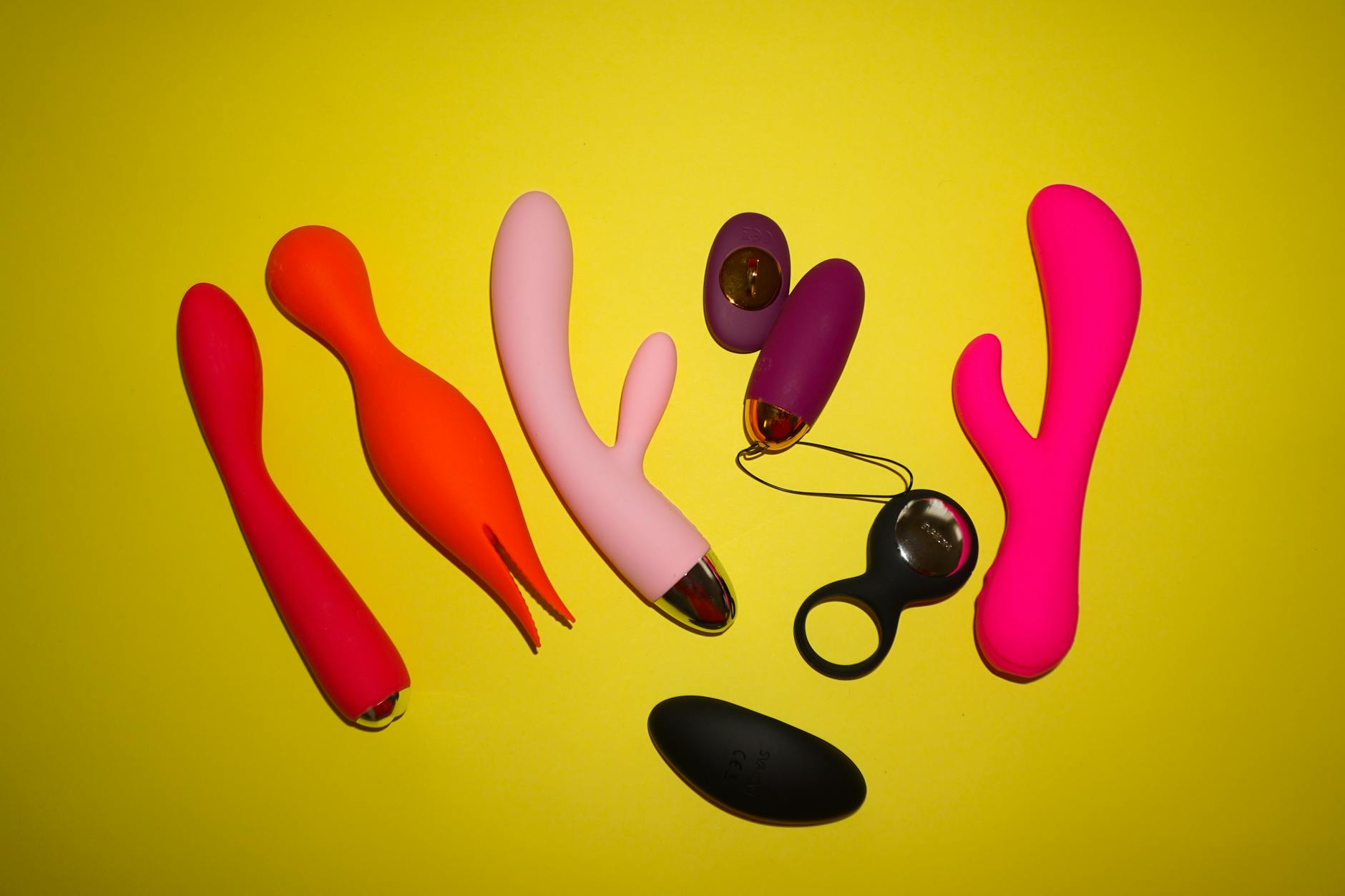
Photo by FounderTips on Pexels
The conversation that comes before the toy
Here's where most people get stuck. They bring a toy into the bedroom hoping it will solve the avoidance. It won't. What the toy does is enable the conversation you actually need to have.
Don't ambush him with a lemon clitoral vibrator during sex. He's not ready. Instead, pick a low-pressure moment. Maybe after dinner. Maybe when you're already talking about money and job prospects and how he's feeling.
The line I use with couples: "I miss being close to you. Not because I need you to perform. Because I miss you. I want to show you what I mean."
Then you tell him you're thinking about trying a toy together. Not because he's failing you. Because you want to rebuild something that doesn't depend on either of you being at your best right now. A lem vibrator is just a tool. What matters is the permission it gives both of you to re-enter the bedroom without judgment.
If he says no, you respect that. You don't push. But you do say, "I'm going to use it alone. And if you ever want to be in the room, or even just talk about it, I'm open." And then you actually do it. You're not punishing him. You're showing him that pleasure doesn't require his participation or approval.
Often, that's enough to crack something open.
How to actually introduce it
When you do bring a lemon vibrator into the room, keep it low-key. No performance, no expectation. You're not trying to turn him on. You're trying to be present with yourself while he's present with you.
Start clothed. Use it through underwear if that feels safer. Let him see that it feels good. Let the sound of it (the Lem has a distinctive hum) become familiar before it feels intimate.
If he wants to touch you while you're using it, that's good. If he wants to just sit there, that's fine too. The goal is for him to experience that your pleasure is separate from his performance, and that you can both exist in the same sexual space without him needing to be "on."
After the first few times, you might invite him to use the lemon sucker on you. That can feel less exposing than penetrative sex or oral sex right now, because the device does the work. He's present, he's involved, but he's not carrying the weight of your satisfaction.
Many couples find that this device becomes the bridge back to other kinds of touch. Once the shame starts lifting and he's not in crisis mode anymore, sex gets easier. But you needed something to hold the space while that happened.
The separate work you both need to do
Let me be direct: a toy is not therapy. A lemon clitoral vibrator can help you rebuild physical intimacy, but it won't rebuild his sense of self or your sense of security in the relationship. That takes separate work.
He probably needs to talk to someone about the shame and identity stuff. Not with you. With a therapist who specializes in male identity and economic trauma. You probably need to talk to someone about the rejection and resentment you're carrying. Again, not with each other. Not yet.
You can rebuild intimacy in the bedroom while he's rebuilding himself in therapy. Those are parallel processes, not sequential ones. One doesn't have to happen before the other.
What does matter is honesty. If you're using a lemon vibrator to sidestep the conversation about what job loss did to your relationship, you're just deferring the crisis. The toy makes the physical part easier. The conversation makes the emotional part possible.
When to see a couples therapist
If three months go by and you're still not touching each other outside the bedroom, or if he's still completely avoiding sex even with the toy present, that's a sign to bring in a professional. Sometimes job loss triggers deeper relationship issues. Sometimes it unmasks resentment that was already there.
A good couples therapist can help you figure out which one is happening. They can also help him process the grief of job loss without it destroying your sexual connection in the process.
Common questions about intimacy after job loss
Is it normal for my partner to avoid sex after losing their job?
Completely normal. Job loss is a blow to identity, especially for people who were raised to believe their worth equals their income. The avoidance isn't about you. It's about shame, stress hormones, and feeling incompetent in a domain that used to feel automatic. Most couples see desire return within 3-6 months as the crisis phase passes, but that only happens if they're rebuilding connection during the gap.
Should I initiate sex, or should I wait for him to be ready?
Initiate, but do it gently and without expectation. Waiting for him to be ready can mean waiting forever. What you're signaling when you initiate is that you still want him, which is the opposite of what shame is telling him. Keep it low-pressure. A lemon clitoral vibrator is perfect for this because you're initiating something that doesn't require his performance.
Can a toy actually help us reconnect, or is it just a band-aid?
It's both. A toy can't fix the underlying crisis, but it can hold the physical space open while he processes the emotional one. You're preventing the relationship from going completely dormant. That matters more than you might think. Many couples who bridge this gap with a toy find that sex gets easier again once the immediate crisis passes.
What if he says no to using a toy with me?
Respect it. Don't push. But also be honest that you need physical intimacy in your relationship. You can use a toy alone. You can ask for other kinds of touch that don't require performance (cuddling, massage, kissing). What you can't do is pretend that months of complete sexual avoidance is sustainable. Set a boundary with compassion: "I love you and I'm here for you. And I also need us to stay connected."
How long should I wait before this gets better?
The acute crisis usually settles in 2-3 months. Sexual desire often takes longer, maybe 6 months if he's getting support. But you shouldn't go a year without any physical affection. If nothing has shifted in 6 months, that's when professional help becomes essential, not optional.
Is there anything I'm doing that's making this worse?
Probably not intentionally. But pushing for sex before he's ready, criticizing his job search, or pointing out that his avoidance is killing your connection will make the shame worse. What helps: giving space for grief, maintaining physical affection that isn't sexual, and being explicit that his worth to you has nothing to do with his employment status. A lemon vibrator gives you a way to do that without words.
The long view
Job loss is a temporary crisis, even though it doesn't feel that way when you're in it. Your relationship can survive it, and it can come out stronger. But only if you stay connected during the difficult months. A tool like a lemon clitoral vibrator won't fix the job market or restore his confidence. But it can keep you close while those things happen somewhere else.
Your pleasure matters. Your need for physical intimacy matters. And the fact that you're trying to bridge this gap thoughtfully, rather than resenting him in silence, matters most of all.
Sources & further reading
- Harley-McKeown, C. (2020). "Economic Stress and Sexual Function in Long-Term Relationships." Journal of Family Issues, 41(8), 1234-1256.
- Kilmann, P. R., et al. (1991). "The Impact of Unemployment on Couples' Interactions." Family Relations, 40(4), 411-417.
- McCoy, K., & Lear, D. J. (2011). "Sexual Dysfunction in the Context of Relationship Disruption." Archives of Sexual Behavior, 40(1), 165-174.
- Stress and Sexual Health Research Network, American Psychological Association (2022).
- Gottman, J. M., & Silver, N. (2015). The Seven Principles for Making Marriage Work. Harmony.