Here's the thing about new relationship energy
Everything feels like it matters more because it does. The first time you mention your pleasure in any concrete way, you're taking a risk. You're saying I know what I want, and I'm trusting you with that. That's vulnerable, and that's real.
Introducing a lemon vibrator to a new partner isn't about the toy. It's about signaling that your pleasure is non-negotiable, that you've thought about it, and that you want them involved. When done right, it builds intimacy instead of threatening it.
Why a lemon vibrator shifts the conversation
Honestly, lemon sexual toys are different from other vibrators in a way that matters for couples. Air-suction clitoral vibrators like the Lem work so fast and focus so specifically on sensation that they sidestep the whole "this is taking too long" dynamic. Your partner doesn't have to do anything differently. They can actually enjoy watching you enjoy yourself because the outcome is faster, more reliably intense, and completely separate from their physical stamina or technique.
That reframe is crucial. A lemon vibrator isn't "I need this because you're not enough." It's "I like this, it feels amazing, and I want you to see that." The suction action on the clitoris creates a sensory experience that's hard to replicate with hands alone. It's additive, not compensatory.
When to bring it up (and when not to)
Timing matters. Don't introduce the topic during sex, and don't do it when you're stressed or disconnected. The conversation works best when you're both relaxed, fully clothed, and nowhere near the bedroom.
Week one or two? Too early. You're still building baseline trust and chemistry. Week four to six is solid. You know each other's communication style. You've already had a few conversations that went well. You feel safe enough to be honest.
The worst time is after a sexual experience where either of you felt disappointed, awkward, or self-conscious. That conversation becomes muddled with defensiveness. Instead, choose a moment when sex felt good, when you both felt connected, and pick it up in conversation the next day.

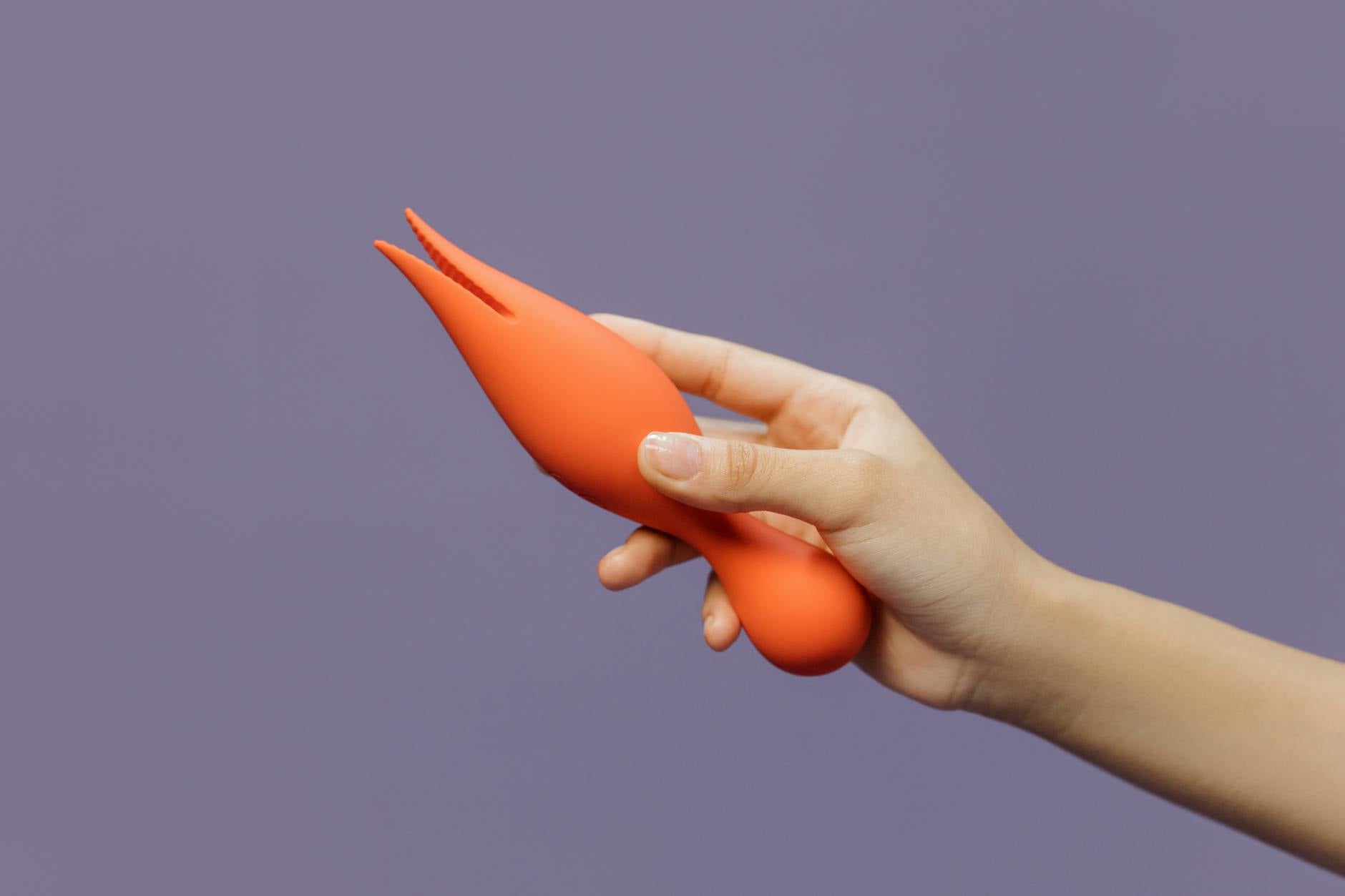
Photo by Diana ✨ on Pexels
The opening that actually works
Forget scripts that sound rehearsed. You want something honest, light, and grounded in pleasure, not apology.
Try: "I've been thinking about what I like in bed, and I realized I want to explore using a toy. Nothing's wrong with what we're doing. I just know myself better now, and I want more of certain sensations. Would you be open to that?"
Or: "I got a vibrator I've been wanting to try. I'd love for you to be part of it, whenever you're comfortable. No pressure, but I think it could be fun for both of us."
The key components: You own it ("I want"), you're not blaming them ("nothing's wrong"), and you're inviting them ("would you be open"). That's it. Don't over-explain or apologize. Don't minimize it.
If they respond with curiosity, answer honestly. If they get quiet or defensive, ask directly: "What's coming up for you right now?" Sometimes a partner worries they won't know how to use it, or they feel insecure, or they're just processing. You can't fix it if you don't know what it is.
Managing the insecurity that might show up
Some partners worry that introducing a toy means they're not enough. It doesn't, but that feeling is real and worth taking seriously. This is where your communication skills matter most.
If they say "I feel like you don't want me," here's what works: "That's not it. I want you fully present and enjoying yourself, not focused on whether you're doing the exact right thing. A toy takes that pressure off both of us. It means more pleasure for me, which actually means more enjoyment for you because I'm more relaxed and connected."
You might also share: "This is about my body and what makes me feel good. It has nothing to do with how I feel about you or your abilities." That's true, and they need to hear it multiple times in multiple ways.
If they stay defensive, you have a bigger relationship question to answer. Can you talk openly about what you both want without shame or blame? If not, a toy isn't the real issue. Getting to that openness is.
The first time you use it together
Keep it simple. You've already done the emotional work of the conversation. Now don't make the physical experience a performance.
Pick a moment when you're already intimate, when things are moving naturally. You might say: "I want to show you something," and then take out your lemon clitoral vibrator and use it on yourself while they're watching or while you're together. That's it. No big production.
Let them see your face when it feels good. Let them hear your breath change. A lot of partners find that incredibly hot because it's real. You're not performing. You're genuinely feeling something, and they get to witness it.
If they want to help, they can. They might hold you, kiss you, or control the toy themselves once you show them how. Some partners want to stay hands-off, and that's fine too. You're not obligated to hand over control on day one. This is your pleasure first.
Rhythm: solo, together, and alternating
Think about how you actually want to use lemon sexual toys with a partner. Some couples use it during foreplay. Some use it while they're having penetrative sex. Some people use it while their partner is inside them, and the combination of sensations is what makes the whole experience more intense.
Other people want to use it solo while their partner watches, or they want it as part of mutual masturbation where you're each doing your own thing in the same space. None of these are better. They're just different pleasures.
The beauty of a lem vibrator or lemon clitoral vibrator is that it doesn't require anything from your partner except their presence. They don't have to learn technique. They don't have to worry about pacing. They can focus entirely on connecting with you and enjoying the fact that you're enjoying yourself.
The toy isn't a replacement for your partner. It's permission for both of you to relax about performance and focus on pleasure.
If they say no
This is the awkward part that nobody talks about. What if you have the conversation and they're not interested? What if they feel threatened or uncomfortable?
You get to decide what that means for you. A partner who refuses to discuss your pleasure, who shames you for knowing what you want, or who sees a vibrator as a personal attack is showing you something important about how they handle vulnerability and intimacy.
You don't have to push. You also don't have to accept a flat no as the final answer forever. You might say: "I respect that this feels uncomfortable right now. Can we talk about what's making you hesitant? Maybe there's something I'm missing."
But if after an honest conversation they're still unwilling to even consider it, you have information. That's about their comfort, their insecurity, or their beliefs about sex. It's not about you or your desires.
How a lemon vibrator actually deepens connection
Here's what happens in couples who navigate this well. They get more curious about each other. They realize they can talk about sex without shame. They learn what their partner actually wants instead of guessing. That foundation of honesty transfers to other conversations. It makes intimacy feel safer because you both know you can ask for what you need.
A lemon sucker toy becomes a small symbol of something bigger: "We can talk about this. We can ask for what we want. We can be honest about our bodies." That's the real connection.
FAQ
What if my new partner already uses vibrators?
Then you skip half the conversation. You both understand that toys are normal and neutral. You might ask what they like, show them yours, and see if you want to explore together. This is actually the easiest scenario because neither of you has to do the emotional labor of convincing the other that toys are okay.
How do I know if they're actually okay with it or just saying yes?
Watch their behavior over the next week or two. Are they asking questions? Are they curious? Do they bring it up again? Or do they seem polite but distant about it? You'll know the difference between genuine interest and tolerance. If it feels like tolerance, check in: "I want to make sure you're actually comfortable with this. Are you?"
Should I let them control the toy the first time?
Only if you want to. You don't owe them control. You can show them how it feels on your own, let them watch, and then decide if you want to hand it over. Some people want hands-on involvement from the start. Some want to observe. Both are fine. Go with what feels right for your body and your comfort.
What if I'm embarrassed about the pleasure response?
That's completely normal. Here's the thing: real pleasure is slightly messy. Real orgasms don't look like porn. Your partner is going to see you in a state of genuine sensation, and that's either going to turn them on or it won't. If it doesn't, that's information. If it does, you've given them something vulnerable and they've honored it. Either way, you've done something brave.
Can I use my lemon clitoral vibrator if we have a lot of other relationship issues?
Using a toy won't fix disconnection, infidelity, poor communication, or lack of trust. It might feel good in the moment, but it won't solve the underlying problem. If your relationship has bigger issues, address those first. A toy is an addition to an already-solid foundation, not a bandage for a broken one.
How often should we use it?
Whatever feels natural. Some couples incorporate it every time. Some use it occasionally. Some use it when a specific situation comes up (like if you want to come quickly, or if penetration alone isn't enough). There's no schedule. Let it be part of your normal pleasure repertoire, not a special event.
The bottom line
Introducing a lemon vibrator to a new partner is a conversation about trust, honesty, and what you deserve sexually. It's not about the toy itself. It's about saying "my pleasure matters" and seeing if your partner can support that.
When you do it well, when you're honest and direct and you pick the right moment, you're building a foundation for years of better communication. You're signaling that shame doesn't live in your bedroom. You're modeling what it looks like to know yourself and ask for what you want.
That's not vulnerable. That's powerful. And any partner worth having will see it that way.
If you want to deepen the conversation around pleasure and communication in your relationship, reach out. There's a lot of good work that can happen when both people are ready to be honest.