How to Use Lemon Vibrators for Better Sensation When Foreplay Feels Rushed
Here's the thing. You and your partner want to have sex. But they're ready in five minutes, and you need fifteen. That gap is real, it's common, and most people handle it badly because nobody knows how to talk about pacing without making it sound like rejection.
A lemon clitoral vibrator solves this differently than you might think. It's not about replacing your partner. It's about building sensation fast enough that you both finish happy, without resentment seeping in.
Why speed mismatch wrecks desire
When a partner rushes foreplay, two things happen at once. First, your nervous system literally doesn't have time to shift into arousal mode. You're still in your head, thinking about bills or what time it is. Your body hasn't sent the signal. Second, you start to feel the pressure to hurry, which makes arousal harder to find, which makes you feel broken, which makes your partner feel rejected. Cycle complete.
The issue isn't that you're slow or they're fast. It's that most people treat sex like a single shared experience with one pace. In reality, your bodies operate on different timelines. A lemon vibrator doesn't fix that difference. It gives you the tool to bridge it without one person sacrificing sensation.
The conversation before the toy
This is the real step. Don't just show up with a vibrator and hope it fixes things. That reads like you're admitting defeat or making a statement, and your partner might hear it as criticism.
Try this instead: "I notice we move at different speeds sometimes. That's not a problem. I just want to warm up faster so we can be more in sync. Would it help if I used something to get there quicker?" This frames it as a tool for your pleasure, not a workaround for their failure.
Most partners will feel relief. They're often worried they're moving too fast and just don't know how to slow down without losing momentum. Giving yourself a way to catch up actually makes them feel better, not worse.
How lemon vibrators solve the pace problem
Unlike fingers, mouths, or a partner's body, a lemon clitoral vibrator delivers consistent, targeted stimulation without negotiating. You control the pressure, the pattern, and the duration. You're not waiting for your partner to figure out what feels good. You're already there.
Start with the vibrator during foreplay, before intercourse. When your partner is kissing you or touching you elsewhere, you hold the vibrator against your clitoris. You set the pattern to what builds sensation for you, not what someone else thinks should work. Most of my clients find they reach readiness in five to eight minutes instead of fifteen.
The second piece is speed of orgasm. If you know you're starting from a lower arousal baseline, using a lemon clitoral vibrator beforehand means you're closer to the edge when penetration starts. Some people orgasm during, some don't, but the pressure lifts either way. You're not working from zero anymore.
The technical setup that actually works
Timing matters. Start the vibrator as part of foreplay, not as a replacement for it. Your partner should still be touching you, kissing you, creating sensation. The vibrator is an addition, not a substitution. This keeps the experience connected instead of making it feel like you've checked out to use a device.
If you're using a lemon sucker style vibrator like the kind designed for air-pulse stimulation, start at a lower intensity. The pressure builds faster than traditional vibrators, and you want to ease into it. Work your way up through the patterns. You're training your body to recognize arousal, not forcing an orgasm on a deadline.
One practical thing: keep the vibrator charged and accessible. Not hidden. Not in a drawer you're embarrassed to open. Keep it on your nightstand or in a drawer that's easy to reach. The moment you start keeping it secret is the moment your partner feels like you're doing something behind closed doors instead of together.

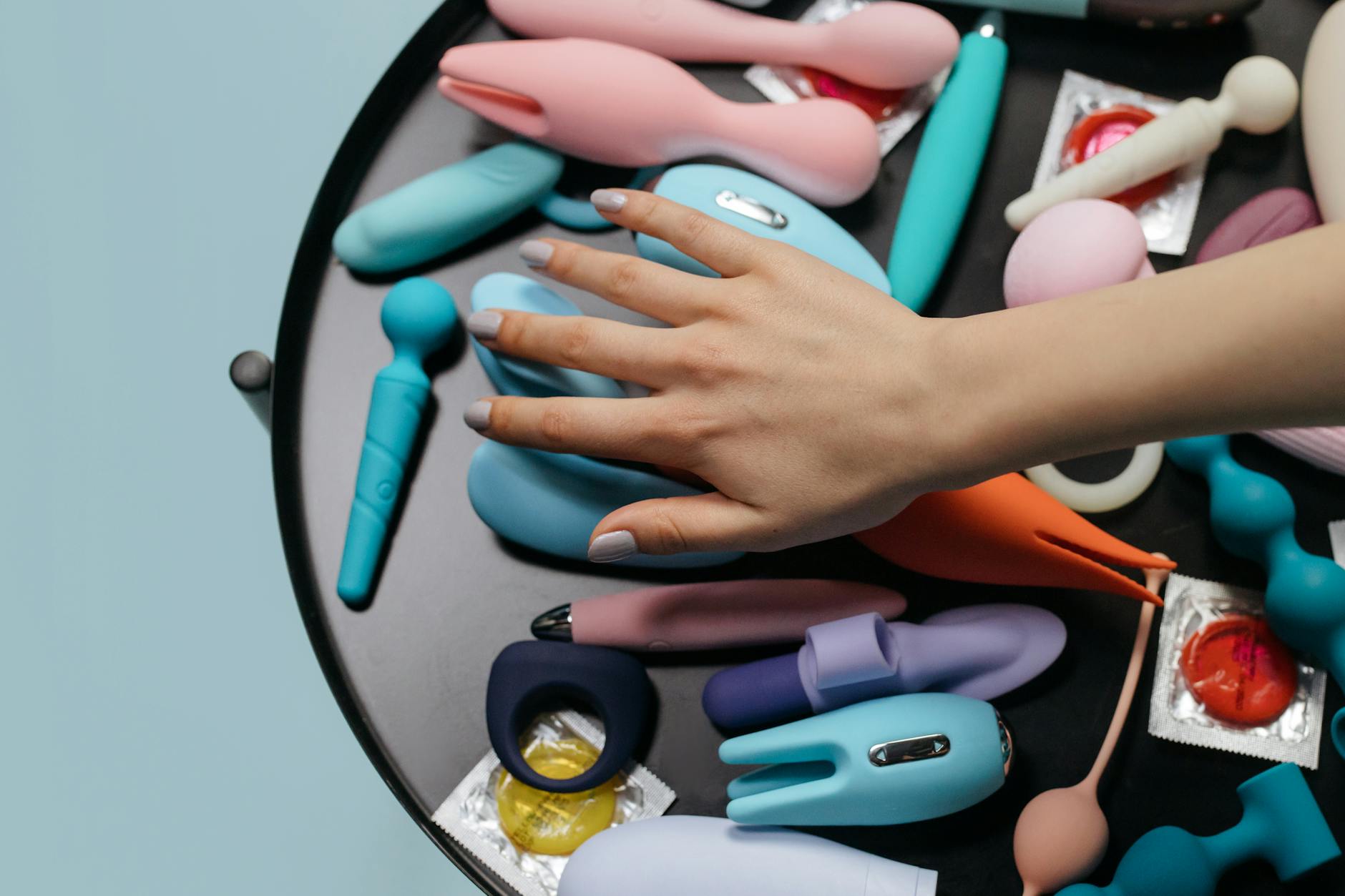
Photo by cottonbro studio on Pexels
What happens during intercourse
Some people use the vibrator during penetration itself. Others get ready with it, then set it aside once intercourse starts. Both are fine. Do what feels good to you.
If you want to keep using it during intercourse, angle it so you're getting clitoral stimulation at the same time. Many partners actually enjoy this because it means you orgasm more reliably, which makes the experience feel more satisfying for both of you. There's no performance anxiety. You're just stacking pleasure.
The key is communication in the moment. A simple "I'm going to use this now" or "keep going" tells your partner they're still part of the experience. You're not leaving them out. You're actually inviting them to be better partners by giving you what you need.
The emotional part nobody talks about
Using a vibrator when your partner wants to rush can feel vulnerable. You might worry it means you're difficult or demanding. That's the opposite of true. You're solving a biological mismatch with generosity. You're saying "I want this to work for both of us, and here's how."
If your partner reacts badly to this, that's information too. A partner who gets defensive about a tool that helps you feel good is showing you something about how they handle your pleasure mattering. That's worth examining.
Most of the time, though, partners are relieved. Sex stops being a performance where someone fails and becomes an experience where both people get what they need.
When this approach doesn't solve it
If the issue is that your partner literally doesn't want to spend time on your pleasure, a lemon clitoral vibrator can't fix that. No vibrator can change someone's willingness to prioritize you. If that's what's happening, the real conversation isn't about speed. It's about respect and whether your needs matter in the relationship.
But most of the time, it's not about not caring. It's about mismatch. A tool bridges that gap. How to use a lemon vibrator when partners have different arousal speeds goes deeper into that dynamic if you want more strategies.
The rhythm you deserve
Your pleasure isn't a luxury or an afterthought. It's part of shared sexuality. A lemon vibrator isn't an admission that something's wrong with you. It's a tool that acknowledges your body has its own timeline and that timeline deserves respect. Using one says: I know what I need, and I'm worth the time it takes to get there.
That's not asking for much. That's asking for the bare minimum of a good sexual relationship.
People also ask
Can I use a lemon vibrator if my partner feels insecure about it?
Maybe the insecurity isn't about the vibrator itself. It might be anxiety about comparison or fear that they're not enough. Start by asking what specifically worries them. Often, just naming the worry defuses it. "Are you worried I'm not attracted to you anymore?" or "Does it feel like I'm choosing this over you?" gets you to the real issue faster than debating whether vibrators are okay.
How long should I use the vibrator before intercourse starts?
There's no rule. Some people need two minutes, some need ten. The point is you're getting to a place where intercourse feels good, not forced. When you notice your breathing changing or you feel genuinely ready, that's your signal. It's not about a specific time limit.
Should my partner use the vibrator on me instead of me using it myself?
Try both. Some couples find it feels more connected when a partner controls it. Others prefer the autonomy of using it themselves. There's no hierarchy of intimacy here. Whatever keeps you in your body and connected to pleasure is right.
What if using a vibrator makes me feel like I'm doing something wrong?
That feeling often comes from old messages about masturbation or self-pleasure being selfish. It's not. Knowing your own body and asking for what you need is actually what makes you a better partner. You're not being difficult. You're being honest.
Can a lemon clitoral vibrator work for everyone, or are some people's bodies different?
Bodies vary wildly. Some people find air-pulse lemon suckers amazing. Others prefer traditional vibration. Some need broader stimulation, others need pinpoint precision. Try different patterns and pressures. If you're not feeling it, that's data. It might be the wrong vibrator or the wrong moment. Either way, you're learning what actually works for you.
What if my partner wants to have sex and I'm genuinely not aroused?
A vibrator can help you get aroused, but it's not a magic fix for not being in the mood. Sometimes you're genuinely not interested, and that's okay too. The vibrator is a tool when you want pleasure but need help getting there. It's not an obligation to be ready on someone else's timeline.