
The thing nobody says about mismatched sex drives
One of you wants sex three times a week. The other wants it three times a month. This is one of the most common relationship problems I see, and almost nobody talks about it clearly. Instead, couples end up in a loop: resentment from the higher-drive partner, guilt from the lower-drive one, and both feeling rejected.
Here's what actually helps: not matching your drives, but creating space where both of you can experience pleasure without scorekeeping.
Why this mismatch happens (and why it's not about love)
Libido differences come from everywhere. Stress, hormones, medications, past relationship patterns, attachment style, and baseline neurology all play a role. One partner might genuinely want sex daily. The other might peak at once weekly. Neither is broken. Neither is "not trying hard enough."
The real problem emerges when the lower-drive partner feels pressured, and the higher-drive partner feels rejected. Both feelings are valid. Both are also completely solvable.
The core conversation you haven't had yet
Most couples skip this step entirely. Before you bring in any tool, you need to separate two different issues that usually get tangled together.
Conversation 1: "How often do you each genuinely want sex?" This is a data-gathering conversation, not a negotiation. The answer might be different than you think.
Conversation 2: "What does pleasure actually feel like for each of us?" The higher-drive partner might want quick, frequent connection. The lower-drive partner might want slow, specific sensation. These aren't in conflict. They're just different.
Most couples skip to fighting about frequency. Skip that. Get curious about quality first.
Where lemon vibrators fit into the gap
Lemon sexual toys, especially air-suction devices like the Lem, solve a specific friction point. When your partner wants sex and you don't feel like partnered penetration, a vibrator creates independent pleasure. You're not declining them. You're meeting them differently.
This sounds simple but it shifts everything psychologically. The higher-drive partner doesn't feel rejected. The lower-drive partner doesn't feel pressured. You're both getting something.
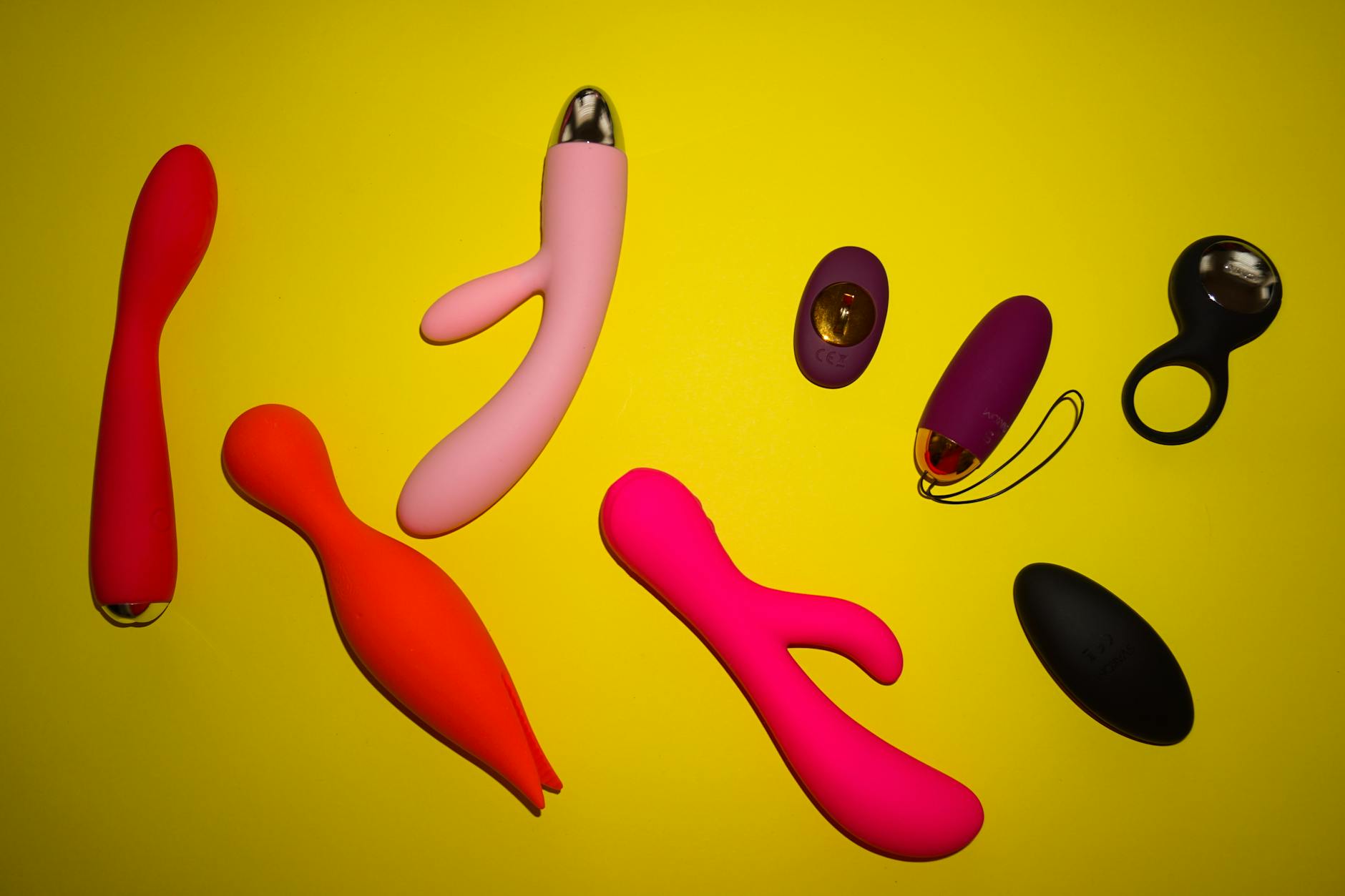
Photo by FounderTips on Pexels
Here's a real scenario. Your partner initiates. You're not in the mood for traditional sex, but you're willing to connect. Instead of declining, you get your lemon vibrator out. You're both present, both experiencing pleasure, both getting physical touch and attention. It takes 15 minutes instead of 30. Nobody's faking it. Nobody's keeping score.
How to actually set this up without awkwardness
The tool only works if you talk about how to use it first. Here's the actual conversation:
Step 1. "When you want sex and I'm not feeling it, I'd like to try something different." Explain that you want to stay connected but on terms that feel real for you.
Step 2. "I want to use a vibrator during those times. Not instead of you. With you present, and with your touch." That last part matters. You're not checking out. You're modifying the format.
Step 3. Agree on a signal. "When I'm not up for penetration but I want to connect, I'll say X." Then you both know what comes next.
Step 4. Try it. Your partner touches you while you use your lemon clitoral vibrator. They see you respond, feel you relax, get to participate. This is not a workaround. This is actual intimacy, just in a different shape.
Why this actually fixes the deeper problem
Mismatched libido creates a trust problem. The higher-drive partner worries they're not attractive enough. The lower-drive partner feels guilty for not wanting more. Both are exhausting narratives.
When you introduce a tool that lets you meet in the middle, something shifts. You're no longer fighting about frequency. You're experimenting with sensation together. The focus moves from "How often" to "What feels good."
I've seen couples do this and discover their lower-drive partner actually wants sex more often when it's not about performance pressure. Turns out the issue was never the drive. It was the emotional context.
The practical setup that actually works
Use a water-based lubricant. Even if you don't need it, your partner will appreciate the sensation difference. Set realistic timing. Don't try this when you're exhausted or distracted. The 10-minute connection works better than a forced 30-minute session.
Start with pattern 1 or 2 on your lemon vibrator. You can always increase. Let your partner watch, ask what feels good, stay present with each other. This isn't about reaching an orgasm fast. It's about pleasure without pressure.
Keep communication open. "That feels good." "Go slower." "I like it when you touch me here too." Your partner gets feedback instead of guessing.
The conversation with your partner about their needs too
Don't forget the other direction. If your partner has a lower drive than you, the same tool works in reverse. You get to experience their pleasure. You're still connected. You're still intimate. You're just doing it at a rhythm that actually feels sustainable.
The key insight: mismatched sex drives aren't about compatibility. They're about communication. Once you stop trying to match frequency and start focusing on shared pleasure, almost everything changes.
When this approach might need more support
If one partner is withholding sex as punishment, or if there's resentment that runs deeper than libido mismatch, you might need a couples therapist. A tool can't fix betrayal or contempt. But it can absolutely help two people who love each other navigate a real biological difference.
If desire has completely vanished for one partner, and it's connected to depression, medication, or hormonal shifts, that's a separate conversation worth having with a doctor. A vibrator helps with sensation. It doesn't treat underlying medical stuff.
But for the everyday mismatch where one person just wants sex more often? This works. It's practical, it's intimate, and it actually solves the problem instead of creating new resentment.
FAQ
Can using a vibrator make my partner feel like I don't want them?
Not if you frame it clearly. You're not rejecting your partner. You're offering a different kind of connection. The difference matters. When you explain it as "I want to stay close to you, and this lets me do that without pressure," most partners understand immediately. They get to stay involved, see your pleasure, and feel desired.
What if my partner feels threatened by the vibrator?
That usually means you're skipping the conversation. A vibrator isn't competition. It's a tool. A vibrator plus your partner's touch is better than a vibrator alone. Invite them in explicitly. "I want you here while I use this. I want to feel you touching me too." Makes all the difference.
How often should we do this instead of regular sex?
There's no formula. Some couples do this once a week, some a few times a month. The point is consistency without resentment. If your partner is satisfied with this form of connection 70 percent of the time and you have partnered sex 30 percent of the time, that's probably sustainable. If your partner feels constantly sidelined, you might need to explore why desire is this mismatched.
Does using a vibrator mean I should be wanting sex more?
No. A vibrator doesn't fix low libido. It creates pleasure without requiring you to force desire. That's the whole point. You're not medicating yourself into wanting more. You're being intimate on terms that work for your actual body and mind.
What if we try this and it feels awkward?
It will, probably, the first time. Everything new feels awkward. The second time is better. By the fourth time, it stops being novel and starts being normal. Give it at least three tries before you decide it doesn't work.
Can lemon clitoral vibrators actually help bridge this gap?
Absolutely. Air-suction vibrators like the Lem are designed for responsive pleasure without the same pressure as traditional vibrators. They're also less intimidating for partners who are new to toys. Most partners find them straightforward and easy to incorporate into partnered play. The key is using them as a connection tool, not a replacement.
The real win
Mismatched sex drives end relationships way too often. Not because the couple is incompatible, but because they never learned to talk about it clearly or find a rhythm that works for both of them. A lemon vibrator isn't magic. It's just a tool that makes the conversation easier and the result more intimate. You're still choosing each other. You're just doing it in a way that feels real for both of you.
If you're stuck in this pattern and want support thinking through your specific situation, get in touch. Connection is absolutely possible, even with different drives.