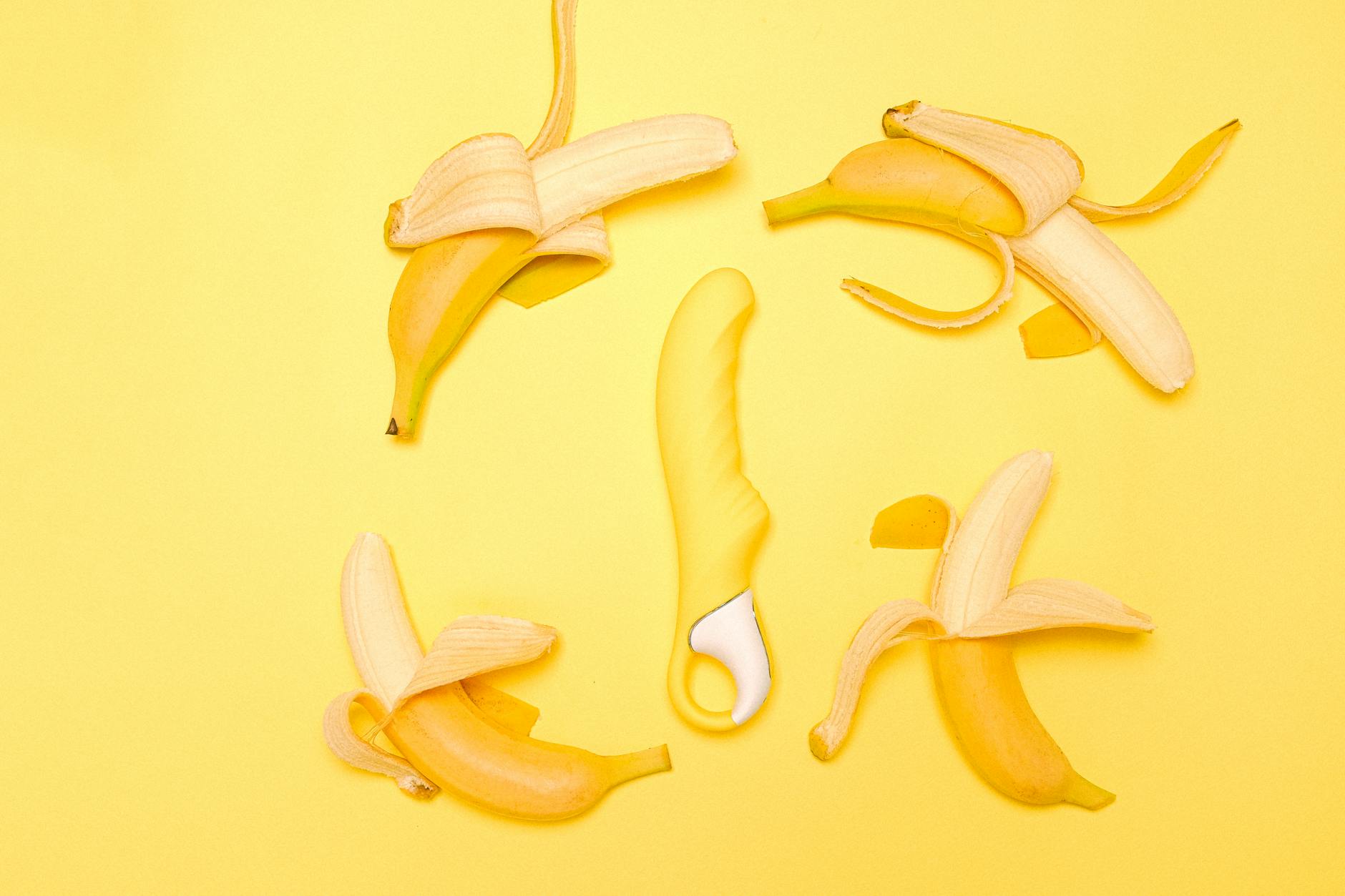
The contradiction nobody names out loud
Here's the thing: you can want sex and not want to be touched. These aren't opposites. They're both real, and they happen at the same time more often than anyone admits.
Maybe you're touched out from work, kids, a partner who needs physical affection constantly, or just the accumulated weight of being in a body that everyone around you wants something from. You still want pleasure. You still want connection to your own sexuality. But the idea of another person's hands on you right now feels like too much.
Lemon vibrators are specifically useful here because they let you access that pleasure without the negotiation, without the timing coordination, without needing someone else's participation in your arousal.
Why touched-out people still want orgasms
Touched out and wanting sex aren't contradictions. They're pointing to different needs.
Being touched out usually means your nervous system is overstimulated or depleted. If you're parenting young kids, managing a high-touch job like nursing or therapy, or in a relationship where physical affection is constant, your capacity for incoming touch gets used up. The need for boundaries around touch is real and valid.
But orgasm isn't about receiving touch. It's about your own nervous system reaching a peak of pleasure. You can absolutely want that. You can want the release, the flooded dopamine, the few minutes where your brain stops thinking about everything else.
The difference is agency. When you're touched out, what you need is control over the experience. A lemon vibrator gives you that. You decide when to start, what intensity, how long, whether to stop or keep going. No coordination. No reading your partner's rhythm or worrying about their satisfaction. Just your pleasure, on your terms.
The physiology of touched-out arousal
When you're overstimulated, your parasympathetic nervous system (the one that handles rest and recovery) is already taxed. Adding someone else's touch can feel like too much input, even if you love that person.
But there's a loophole: when you're the one creating the stimulation, your brain processes it differently. You're not receiving; you're directing. That distinction changes everything neurologically.
Using a lemon clitoral vibrator, you control the pattern, the intensity, the rhythm. Your brain isn't processing incoming stimuli that might push you over the edge into overwhelm. Instead, you're actively creating the sensation you want. That active role actually calms the nervous system while still allowing arousal to build.
It's the difference between someone continuously touching you (which can feel invasive when you're already overstimulated) and you choosing exactly where and how hard the stimulation hits (which feels manageable and safe).
How lemon vibrators solve the touched-out problem
There are a few specific reasons why a lemon clitoral vibrator works better than other options when you're feeling this way.
First: the suction pattern is different from finger contact. A lemon vibrator uses air-pulse suction rather than direct vibration. This feels less like another person's touch and more like a distinct sensation your body recognizes as separate. That psychological distance matters when you're already saturated with human contact.
Second: you can use it solo without feeling isolated. This is key. You're not foregoing connection; you're just redirecting it. You can have an orgasm that's entirely yours while still being in the presence of a partner or thinking about them afterward. Some people find that solo pleasure actually deepens intimacy because they're coming to the table restored, not depleted.
Third: the intensity is predictable. Unlike another person's touch, which requires communication and coordination, a lemon vibrator does exactly what it did last time. There's no guessing, no adjusting mid-way, no "am I going too hard or not hard enough." Just consistent sensation you control.
Using a lemon vibrator when your partner is in the picture
If you're in a relationship and you're touched out, your partner might feel rejected or confused. That's worth addressing head-on.
The conversation isn't "I want to use a vibrator instead of sex with you." It's "My nervous system is overstimulated right now, and I need some solo time to recharge. When I'm back in my body, we'll have better connection." Those are true. Solo pleasure and partnered sex aren't either-or.
Many couples find that building in space for solo pleasure actually improves their sex life. When you're not desperate and resentful, when you've had orgasms that were purely yours, partnered sex becomes something you're genuinely interested in rather than something you're managing.
Some people find it works to use a lemon vibrator while a partner is present but not participating. You're in the same room, maybe they're reading or working on something, and you're getting yourself off. That proximity without demand can feel intimate in a totally different way. It's not about rejection; it's about coexistence.
Practical setup for touched-out arousal
A few logistics that matter.
Privacy and predictability. Set a time and place where you know you won't be interrupted. Touched-out people especially need to know they can relax fully. If you're listening for a knock on the door or a kid calling, your nervous system stays semi-activated. That defeats the purpose.
Remove other sensory input. When you're already overstimulated, dimmed lights and no music might help more than ambient stuff you'd normally enjoy. You're not adding more; you're clearing space for just the sensation of the vibrator.
Lubrication and comfort. Your body might be slower to produce natural lubrication when you're stressed or touched out, so have water-based lube ready. The goal is zero friction resistance. You want this to feel easy.
Start with lower intensity. The first time using a lemon vibrator in this state, begin at pattern 1 or 2. Your nervous system is already activated. You don't need to jump straight to high intensity. Build it slowly. You might find you need less intensity than you think because your body isn't depleted.
When touched-out feelings point to something deeper
If you're consistently touched out and have been for months, that's worth examining beyond the immediate fix.
Lemon vibrators are great for the moment. But consistent touched-out-ness often signals boundary issues, burnout, or unmet needs in your relationship or life. If you're always the one doing physical labor, emotional labor, or managing everyone's needs, a vibrator won't fix that. It'll just be a band-aid.
Someone might genuinely need to renegotiate how much physical affection they're expected to give, or how much emotional labor they're managing. Those conversations are separate from using a lemon clitoral vibrator. They're about structure, not about solo sex.
If the touched-out feeling is new or severe, it can also signal depression, burnout, or hormonal shifts. Check in with yourself about what's actually happening before assuming it's just about sex.
Why this matters for your relationship
Honestly, the fact that you want more frequent sex while also needing space from touch is actually a sign of a healthy libido and healthy boundaries existing at the same time.
You're not rejecting sex or intimacy. You're just needing it on different terms sometimes. A partner who understands that you can want pleasure and want autonomy simultaneously is someone who gets that your sexuality belongs to you first.
Using a lemon vibrator in this context isn't a workaround. It's an expansion. You're not settling for solo sex instead of partnered sex. You're adding a whole category of pleasure that makes you show up better in the rest of your life.
FAQ
Can I use a lemon clitoral vibrator if I'm touched out but still want partnered sex?
Completely. Using a lemon vibrator solo doesn't mean you never want your partner to touch you again. You're just creating space between now and when you're ready. Many people find solo pleasure actually improves partnered sex because they're not coming at it depleted.
How often should I use a lemon vibrator when I'm touched out?
As often as feels good. There's no rule. Some people use one every day, some once a week. The point is you have control. Listen to your body and your energy levels, not a schedule.
Will using a lemon vibrator make me want my partner less?
Nope. If anything, it usually works the opposite direction. When your nervous system isn't constantly overwhelmed, you have more capacity for intimacy. Solo pleasure and partnered pleasure aren't in competition.
Can I tell my partner I'm using a lemon vibrator without them feeling rejected?
Yes, and it's worth being direct. Something like "I'm feeling really touched out right now, so I'm going to take some time with solo pleasure to reset. This isn't about you." Most partners actually appreciate knowing what's happening rather than guessing.
What if my partner wants to use the vibrator on me when I'm touched out?
You can absolutely say no. If you're touched out, you're touched out. A vibrator in someone else's hands is still incoming sensation. If that doesn't feel good, it doesn't feel good, and that's information worth honoring.
Is it normal to feel guilty about wanting solo pleasure when you're in a relationship?
Yes, and it's not justified. Your pleasure is yours. You don't owe anyone your body or your orgasms. How to Use Lemon Vibrators When You Feel Guilty About Pleasure covers this in more depth if you want to dig into it.
The bottom line
Wanting more sex and needing less touch aren't contradictory. They're both about autonomy and what your nervous system actually needs right now.
A lemon vibrator lets you have both. You get the pleasure and release you're craving without the sensory overload of another person's hands. You get restored faster, which paradoxically makes partnered intimacy better when you're ready for it.
Your pleasure matters. Your boundaries matter. And you don't have to choose between them.