How to Use Lemon Vibrators When Your Partner Wants More Sex Than You Do
Desire mismatch is one of the most common relationship tensions. Here's how lemon clitoral vibrators can help you reconnect on your terms, without pressure or resentment.
Here's the thing: desire mismatch is one of the top reasons couples come to my office. One partner wants sex three times a week. The other wants it once a month. Neither person is wrong. Both are frustrated. And almost always, the lower-desire partner ends up feeling guilty, coerced, or just... resentful.
The relationship starts to feel transactional. Your partner initiates, you say no, they withdraw emotionally, you feel bad, so you say yes anyway. That cycle doesn't fix the mismatch. It just makes both of you miserable.
Desire doesn't work like an on/off switch. It's more like a dimmer dial, and it responds to stress, connection, body image, medication, work, sleep, and about fifteen other things that have nothing to do with how much you love your partner.
The research is clear: low desire in the context of a high-desire partner is often a stress response, not an attraction problem. When you feel pressured, your nervous system goes into protection mode. Your body literally becomes harder to arouse. Your brain gets noisy. Touch feels like an obligation instead of a pleasure.
Then there's the guilt layer. You feel guilty for not wanting what your partner wants. That guilt makes you less present during sex. Less presence means less pleasure. Less pleasure reinforces the cycle.
Breaking this pattern requires two things: your partner needs to genuinely back off the pressure (not grudgingly, but actively), and you need permission to rebuild desire in your own space, at your own pace.
Lemon clitoral vibrators fit perfectly into that second part.
I know that sounds counterintuitive. If you're already having a desire mismatch, shouldn't you be working on couple dynamics, not going solo?
Yes, you should work on couple dynamics. And you should also reclaim your own arousal.
Here's why: when you've been feeling pressured for months or years, your body has learned to guard itself. Your nervous system stays in a protective state. Even when your partner backs off and creates space, your arousal doesn't automatically flip back on. You've developed what I call "responsive desire" that's broken because the initial spark of interest keeps getting dampened by stress or obligation.
Using a lemon vibrator solo, in a space where there's zero pressure and zero expectations, teaches your body that pleasure is safe again. You're literally retraining your nervous system. You're reminding yourself what arousal feels like when it's not tangled up with guilt or resentment.
Once you reconnect with that, partnered sex becomes a choice instead of a chore.
First: tell your partner what you're doing and why. Not to invite judgment, but to invite understanding. You might say something like, "I've realized I need to spend some time getting back in touch with what pleasure feels like for me. This isn't about you. It's about me rebuilding my own arousal, so that when we're together, I'm actually present."
A partner who loves you will get this. A partner who doesn't get this is a different problem, and that's something to address separately (possibly with a couples therapist).
Second: pick a time when you're alone and not rushed. Twenty to thirty minutes, no phone, no interruptions. This matters because your brain needs to believe you're truly safe.
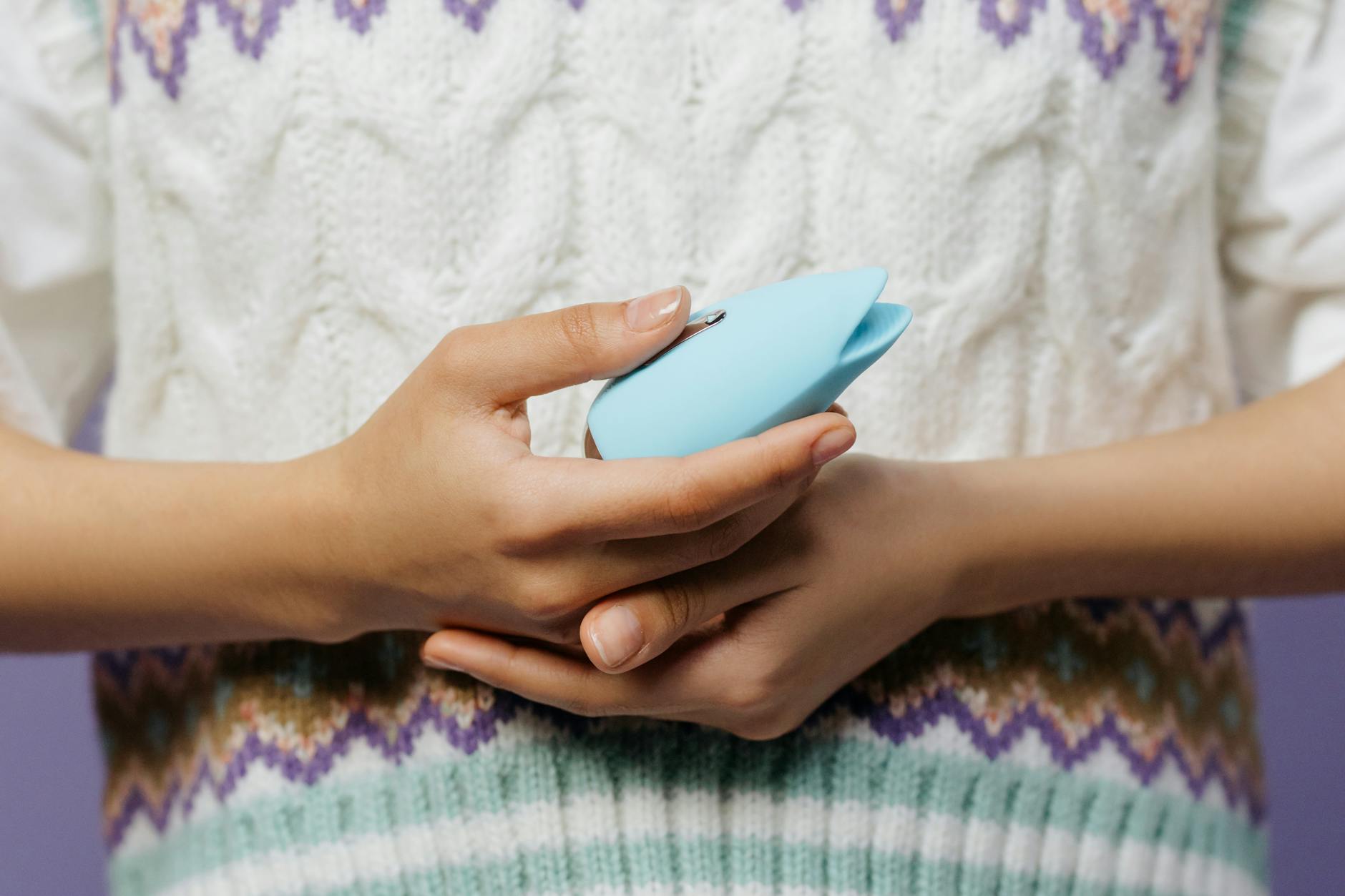
Start with a lemon clitoral vibrator like The Lem, which uses gentle suction instead of intense vibration. Many people with low desire respond better to suction because it feels less invasive. You're not battering your clitoris into submission. You're creating a gentle, rhythmic stimulation that lets your body ease into arousal rather than getting jolted into it.
Don't start with the vibrator. Start with your body.
Spend five to ten minutes just touching yourself however feels good. Your breasts, your thighs, your belly. Your vulva. No agenda. If nothing feels good, that's fine. You're just checking in with what your body wants today.
Then, when you feel a whisper of interest (not full arousal, just a tiny spark), introduce the lemon vibrator. Start on the lowest setting. Don't go straight for the clitoris. Run it along your inner thighs, your labia, the outer edges. Let your nervous system relax into it.
Once your body is clearly interested, move to direct clitoral stimulation. Pay attention to what pattern feels best. Most people find that they need to stay at one setting for a while, building sensation gradually, rather than constantly turning things up.
The whole point is to go slow enough that your mind stays quiet. No performance pressure. No "am I taking too long?" thoughts. Your only job is to feel what you feel.
Once you've spent a few weeks or months rebuilding your solo arousal, something shifts. You start to remember what desire actually feels like. You might find yourself thinking about sex more. Your body becomes more responsive. That responsiveness isn't fake. It's real arousal that you've given yourself permission to experience.
Then, when you come back to partnered sex, it's different. You're not doing it out of guilt. You're doing it because your body actually wants it. And your partner can feel that difference. That authenticity is magnetic. It reconnects you both in a way that obligation sex never could.
This doesn't mean you'll suddenly match your partner's desire. You might still want sex less frequently. But the quality shifts completely. There's genuine interest instead of resentment. There's presence instead of checking out.
Here's what I need to say clearly: using a lemon vibrator will not fix desire mismatch if your partner is still pressuring you for sex.
Your partner has to understand that backing off isn't a temporary thing. It's a permanent boundary. No more initiating when you've said no. No more emotional withdrawal when you decline. No more resentment. If they can't do that, then you're not really getting the space you need to rebuild arousal.
If this conversation keeps failing, or if your partner refuses to take their pressure down, that's a sign you might need couples therapy. A therapist can help you both understand that desire mismatch isn't a character flaw. It's a compatibility issue that requires mutual respect and genuine change on both sides.
Once you're reconnecting with your own arousal through a lemon clitoral vibrator, you might eventually want to bring that into partnered sex. You don't have to. Some people prefer to keep solo pleasure completely separate from partnered sex. That's totally valid.
But some couples find that introducing a vibrator into their intimate time actually reduces the pressure dynamic. It shifts the focus from "is this taking too long?" to "what feels good to both of us right now?" Suddenly, it's collaborative instead of performative.
If you want to try this, start with a conversation. Don't surprise your partner with a vibrator during sex. Tell them you'd like to explore using one together. Explain that it's not because they're not enough. It's because you want to experience different kinds of stimulation together.
Start slow. Let your partner watch first, with no pressure to do anything else. Many partners find watching genuinely arousing once they let go of the idea that the vibrator is replacing them. It's not. It's expanding what's possible.
You might not have an orgasm the first time you use a lemon vibrator. You might feel self-conscious. You might find that your mind is still noisy even alone. All of this is normal, especially if you've been in a pressured dynamic for a long time.
Stick with it. Your nervous system doesn't trust that this is safe yet. After three or four solo sessions, most people start to relax. After a few weeks, arousal becomes more accessible.
If you're on antidepressants or other medications that affect arousal, this rebuild might take longer. That's okay. The timeline doesn't matter. Consistency matters more than frequency. Even once a week is enough to retrain your nervous system.
Look, sometimes desire mismatch gets better with time and reconnection. Sometimes it doesn't. Sometimes you end up at a compromise that works for both of you. Three times a week becomes twice a week. Once a month becomes twice a month.
What matters is that you're both choosing it. You're not guilted. You're not pressured. You're both clear on what you actually want, and you're both working to meet in the middle with respect.
A lemon vibrator won't fix a relationship that's built on pressure and resentment. But it can help you reclaim your own arousal, rebuild your confidence in your body, and remember why sex felt good in the first place. And once you have that back, the conversation with your partner becomes less about obligation and more about genuine connection.
Maybe, maybe not. What it will do is help you reconnect with your own arousal in a pressure-free space. Some people find that once they're not feeling guilty or coerced, their desire naturally increases. Others stay at their baseline level of desire, but it becomes more accessible when they choose it. Both outcomes are fine. The goal isn't to match your partner's frequency. It's to be genuinely present when you do have sex.
That's a conversation worth having directly. Some partners worry that a vibrator means they're not enough. They're not. That's insecurity talking, and it's your partner's work to address it, not your job to reassure them constantly. You might say, "I'm doing this for me, not against you. I need to rebuild my own arousal so that partnered sex feels like something I want, not something I'm obligated to do."
If your partner continues to feel threatened after you've explained this clearly, that's a sign of controlling behavior, and that's worth addressing with a couples therapist.
Absolutely. Some couples find that a vibrator actually takes pressure off because it shifts the focus from "can I come from penetration or manual stimulation alone?" to "what feels good right now?" It can make sex feel more collaborative and less performance-oriented. Start with the conversation first, though. Make sure you're both on the same page.
Most people start to feel a shift within two to three weeks of consistent solo use. You might notice that you're thinking about sex more, or that your body responds faster when you do have partnered sex. The real change often happens around the six to eight week mark, when your nervous system has genuinely learned that pleasure is safe again.
A lemon clitoral vibrator can still help, but the rebuild might take longer. Your nervous system still needs to relearn arousal, and a vibrator makes that easier. If medication is significantly dampening your desire, it's also worth talking to your doctor about whether an adjustment is possible. Sometimes a different medication or dose helps. Sometimes it doesn't. Either way, reclaiming your own arousal is still valuable.
Completely normal. You're not being selfish. You're setting a boundary that says, "My body is mine, and I get to choose what happens with it." That's actually the opposite of selfish. Selfish would be saying you'll have sex when you don't want to, then resenting your partner for it. Setting a clear boundary and taking care of your own needs is healthy.
If you're in a desire mismatch, you're not alone. It's one of the most common relationship issues I work with. And the couples who move through it successfully are the ones who stop seeing it as a problem to fix and start seeing it as a difference to respect.
Using a lemon clitoral vibrator is one piece of that. It gives you back your arousal. But the bigger piece is the conversation with your partner, and possibly working with a couples therapist to rebuild connection and trust.
Your pleasure matters. Your boundaries matter. And you deserve partnered sex that feels like something you choose, not something you tolerate.
Ready to have that conversation with your partner? Or need more guidance on navigating desire mismatches? Reach out to us at Get Lem Clit Toy. We're here to support your journey toward reconnection, on your terms.