Here's what nobody tells you about hormones and sensation
Your clitoris doesn't stay the same all month. The tissues swell and recede, sensitivity peaks and dips, and the way your body responds to a lemon vibrator changes with each phase of your cycle. Most people notice this by accident, maybe wondering why their favorite toy feels incredible one week and almost numb the next. This isn't random. It's biology, and understanding it transforms how you use any clitoral vibrator.
I work with people navigating pleasure across every life stage, and the most common frustration I hear is this: "Why does what felt amazing last week feel wrong today?" The answer isn't that your preferences changed. Your hormones did.
What estrogen and progesterone actually do to your clitoris
Estrogen and progesterone don't just govern your menstrual cycle. They directly affect blood flow, tissue thickness, and nerve sensitivity in your vulva. During the follicular phase, when estrogen is climbing, the clitoral tissue swells slightly. More blood flow means heightened sensitivity. This is why many people feel more responsive during the first half of their cycle.
Then progesterone takes over post-ovulation. Blood flow decreases a touch. The tissue firms slightly. Sensation doesn't disappear, but it shifts. Some people describe this phase as feeling more "internal" or less responsive to direct stimulation. Others find they need longer arousal time to build that same peak sensation.
This isn't a malfunction. It's a rhythm.
How this changes the experience with air-suction toys
Lemon sucker devices like the Lem work through gentle suction rather than vibration. That means they're incredibly responsive to these hormonal shifts because they rely on blood flow and tissue responsiveness. When estrogen peaks, many users report that lower suction patterns (settings 1-3) feel intense and satisfying. The same settings during the luteal phase might feel gentle or even underwhelming.
Here's the practical part: knowing your cycle means knowing exactly which intensity setting will serve you best on any given day. During peak follicular phase, you might crave setting 2. During luteal, setting 4 or 5 might be where you find your sweet spot. This isn't about having a broken toy or changing taste. It's about matching the tool to your body's current state.
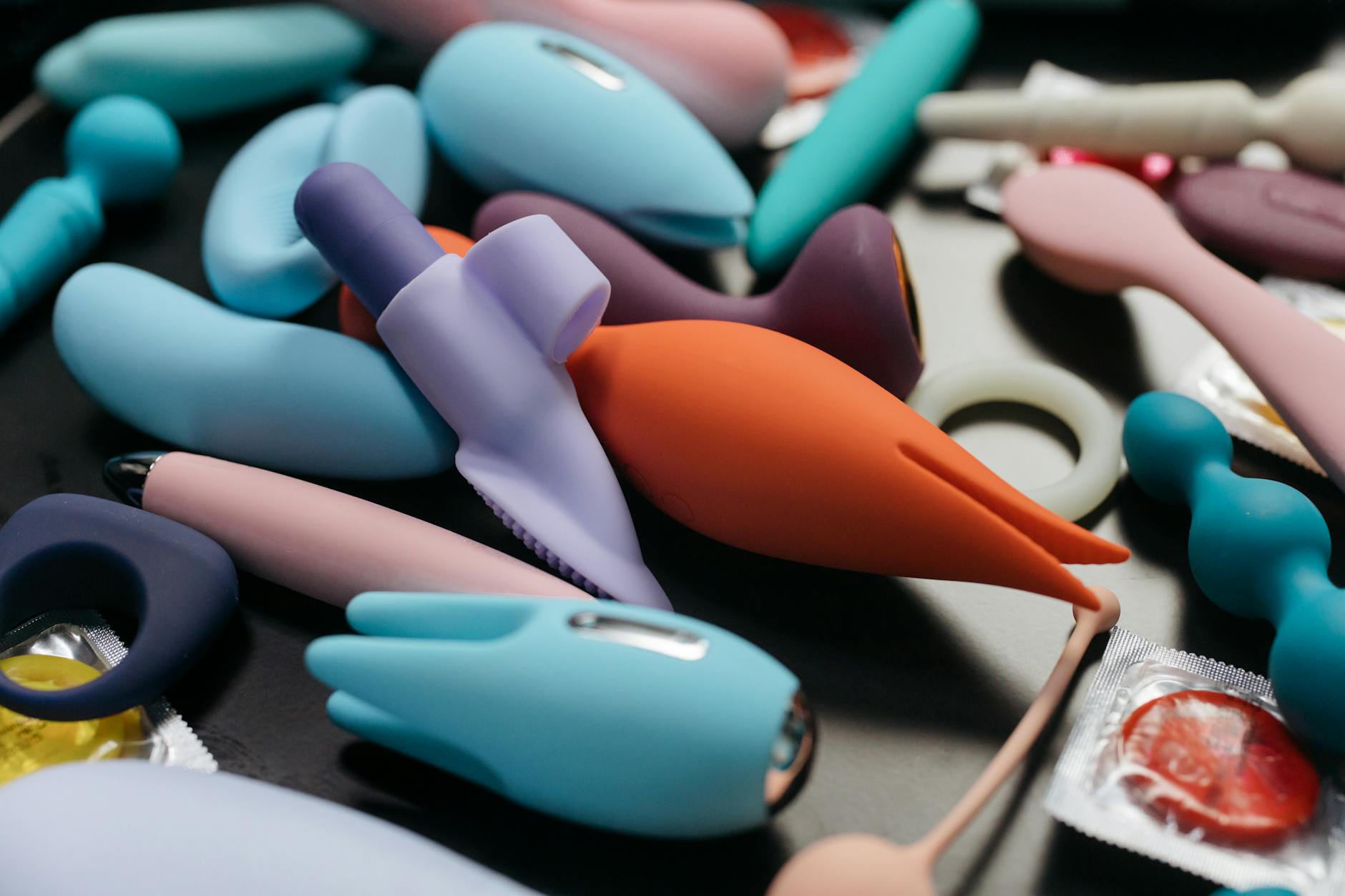
Photo by cottonbro studio on Pexels
Why you might feel less aroused in certain phases
Progesterone has a dampening effect on arousal and motivation in general, not just sexual response. This isn't depression. It's physiology. During the luteal phase, your body temperature rises slightly, your metabolism speeds up, and your brain chemistry shifts to make you feel more internally focused. Some people describe this phase as introspective. Others feel it as lower libido.
The trap is blaming yourself. Many people interpret lowered desire during the luteal phase as a sign something is wrong with the relationship or their body. In reality, it's often just progesterone doing its job. Understanding that this dip is temporary and cyclical can be genuinely liberating. You're not broken. You're not losing interest. You're cycling.
The same body that feels less interested in partnered sex during the luteal phase might feel incredibly responsive to solo exploration with a lemon vibrator during peak fertility. That's not a bug. That's your nervous system responding exactly as designed.
How to adjust your technique for each phase
Here's a practical framework I share with people:
Follicular phase (days 1-14, roughly): Your clitoris is increasingly engorged. Arousal builds faster. Start with moderate intensity on your lemon clitoral vibrator and let yourself build from there. You might find you orgasm more quickly than usual, which is perfectly normal and feels great. Allow yourself longer warm-up periods if you want to extend the experience.
Ovulation (days 12-16): Peak sensitivity. This is often when the strongest orgasms happen. Use whatever intensity feels right. Your body will likely guide you clearly. Trust it.
Luteal phase (days 17-28): Progesterone has climbed. Your clitoris is less engorged. Slower arousal is expected. Start lower and build gradually. You might find you need more time, more lubrication, or higher intensity to reach the same peak. All of this is normal. Your lemon sexual toy still works perfectly; your body just needs a different approach this week.
The other factor that matters: lubrication. During the follicular phase, your body produces more natural lubrication. During luteal, you'll likely need to add some. A simple water-based lubricant pairs beautifully with any clitoral vibrator and removes friction that can feel uncomfortable when tissues are slightly less swollen.
What to do when the intensity doesn't match anymore
One of the hardest moments is realizing that a technique that worked beautifully last week feels wrong this week. This is when people panic and wonder if something is wrong with their nervous system or their relationship or their toy. None of that is usually true.
Instead, treat it as useful information. If you normally love setting 3 on your lemon vibrator but it feels numb during your luteal phase, try setting 5. If you usually need arousal time and suddenly you're responsive immediately, honor that too. Your body is communicating in real time. The point isn't to force a standard experience. It's to stay curious and responsive to what's actually happening right now.
This is also why owning a toy like the Lem with multiple intensity settings is powerful. You're not buying one experience. You're buying the flexibility to meet yourself wherever you are in your cycle.
The mental game underneath the physical shifts
I want to name something that doesn't usually get discussed in toy reviews: the mental load of hormonal shifts. Knowing intellectually that your desire dips during the luteal phase is useful. But feeling worthy of pleasure during that phase is the real work.
Many people (especially women) have internalized the idea that consistent, constant desire is the baseline and anything less is a failure. That's why luteal phase lowered libido feels shameful instead of normal. Reframing this cycle as information instead of deficit is relationship-changing. Your desire isn't broken. It's responsive.
Same applies to partnered sex. If you're cycling with a partner, the most useful conversation isn't "why don't you want me this week." It's "here's how my body is responding right now, and here's what would actually feel good." That specificity transforms both people's experience.
When you know your cycle and match your pleasure tools accordingly, you're not accommodating a broken system. You're honoring how your nervous system actually works. That's radical.
People also ask
Why do clitoral vibrators feel less intense during my period?
During menstruation, hormones are at their lowest. The clitoral tissue is less engorged than during the follicular phase, and blood flow is redirected internally to support shedding. This means less sensitivity to direct stimulation. Some people find this phase uncomfortable for intense clitoral work. Others prefer gentler tools like a lemon sucker at lower settings during menstruation and find it hits differently. This is also when orgasms can feel deeper and more pelvic rather than concentrated in the clitoris.
Does using a lemon vibrator during different cycle phases damage anything?
No. Your toy can't damage your body by existing at different settings. What matters is listening to pain signals. If something hurts, stop. But if an intensity setting feels good one week and not the next, that's just your cycle, not an injury. You can safely use the same clitoral vibrator across every phase of your cycle.
Can I still have great orgasms during my luteal phase?
Absolutely. Orgasms during the luteal phase often feel different, which some people prefer. They might be less explosive and more rolling. Some people describe them as deeper. The intensity and quality of orgasms varies by phase, but "different" doesn't mean worse. Many people find their most satisfying orgasms happen mid-luteal when progesterone is high and their nervous system is settled.
Should I use lube with my lemon clitoral vibrator during specific phases?
You might not need lubricant during the follicular phase when your body produces more. During luteal and menstruation, adding water-based lube removes friction and makes lower-sensitivity days feel better. It's not about something being wrong. It's about matching conditions. Lube during any phase is fine, though some people find they prefer the direct contact during high-estrogen phases.
Why do my orgasms feel different in different cycle phases?
The clitoral tissue is responding to different hormone levels, and your pelvic floor tension changes across the cycle too. Post-ovulation, when progesterone rises, many people find their pelvic floor is naturally more tense, which can intensify sensation internally but feel different on the clitoris. The actual nerve pathways don't change, but the physical state of the tissue does, which changes how stimulation feels.
What if I don't have a consistent cycle?
Irregular cycles, birth control, stress, and health conditions all affect hormonal patterns. If your cycle is unpredictable, tracking sensation instead of dates might be more useful. Notice when your body feels responsive, when you need more stimulation, and when you want gentler touch. That information is as valuable as calendar tracking and helps you understand your own baseline.
The takeaway
Your body isn't failing you when sensation shifts across the month. It's responding to real biological changes. Understanding how hormones affect your clitoris and your pleasure means you stop blaming yourself for normal variation and start using that knowledge to actually feel better. A lemon vibrator isn't a one-size-fits-all tool. Neither is your body. The best thing you can do is get curious about how both work together throughout your cycle.
If you want to explore how to match techniques to different phases, how to use lemon vibrators for maximum pleasure and comfort breaks down the mechanics. And if you're still figuring out whether a lemon sucker is right for you, start with how to choose a lemon vibrator if you're new to suction toys. Your pleasure deserves this kind of attention.