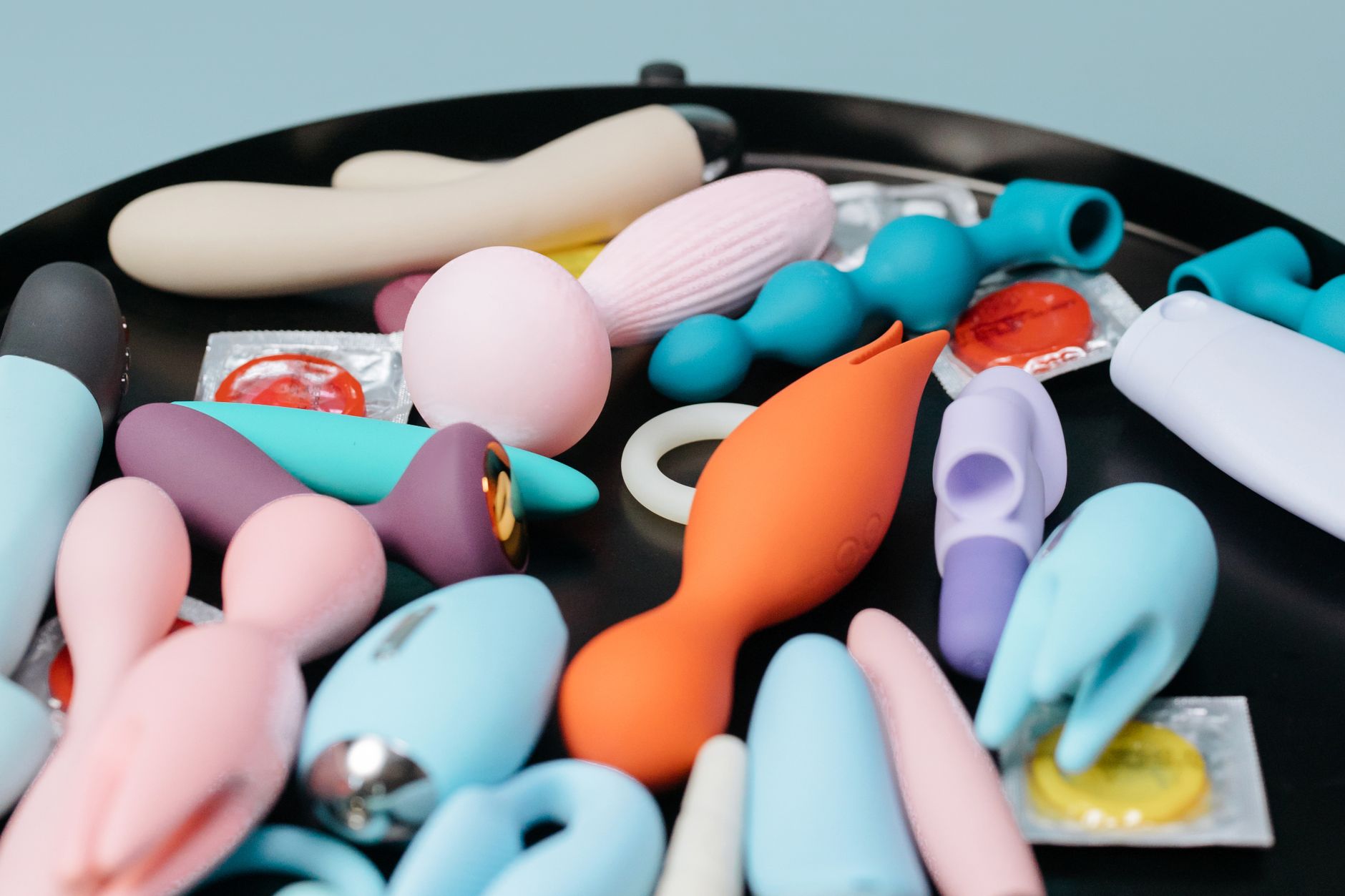
Let's be real about what happens to couples over time
After ten years, fifteen years, or twenty years together, sex doesn't disappear. It just becomes quiet. You're not fighting. You're not unhappy. You've simply stopped reaching for each other in that way, and the reaching back feels riskier every year because the gap has widened.
Then someone suggests a toy, and the reflex is immediate: that's not what we need. What we need is more time, more romance, more presence. Which is true. And also beside the point, because the physical layer has shifted too, and no amount of date nights fixes a body that has stopped responding the way it used to.
The real problem isn't desire. It's reentry.
When couples come to me after a long stretch of infrequent or absent physical intimacy, the first thing they describe isn't loss of love. It's loss of language. You've forgotten how to touch each other in a way that lands. Your partner's body feels different because you're different. And starting again feels less like romance and more like performing a rusty skill in front of an audience of one.
That's where lemon vibrators change the equation. Not because they're magic, but because they create permission to relearn each other without the weight of expectation.
Here's what I mean: a traditional vibrator is straightforward. It does one thing. But lemon clitoral vibrators like the ones from Hello Nancy work through suction and pulsing patterns, which means the sensation is gentler at first, more forgiving. For couples trying to rebuild intimacy, that softness matters. It gives you room to remember pleasure as a shared language instead of a performance metric.
Why suction changes the dynamic for couples specifically
When you're working with a lemon clitoral vibrator together, a few things happen physiologically that break the stalemate.
First, suction stimulates more nerve endings across a wider surface area than direct vibration does. That means less intense pressure is needed to create sensation. For couples where one partner has experienced hormonal changes, surgical recovery, or just the exhaustion of time, that reduced intensity is critical. The receiving partner gets to experience pleasure without bracing for it.
Second, the sensation is different enough from what you may have tried before that it reframes the experience. You're not retrying what didn't work. You're exploring something genuinely new together. That neurological novelty actually increases dopamine in both partners. You're not just adding stimulation. You're creating a moment that feels fresh.
Third, and this is the couples-specific part: suction has a gentler learning curve. You start at a lower intensity, you work up together, and there's no performance pressure because you're both discovering the patterns. A lemon vibrator invites collaboration rather than consumption.
The emotional architecture underneath
Physically, lemon vibrators are excellent tools for rebuilding sensation. But the real work is emotional, and the toy is just the vehicle.
When you introduce a device together into a relationship that has been non-physical for a while, you're essentially saying to each other: I want to learn how to touch you again. That's vulnerable. It's also powerful.
I often recommend that couples start not with the device, but with conversation. What sensations do you miss? What are you nervous about? What does pleasure look like to you now, not ten years ago? Once you've had that conversation, the lemon vibrator becomes a bridge between the conversation and the body, not a replacement for it.
Most couples I work with find that the first time they use a clitoral vibrator together, they're not even primarily focused on orgasm. They're amazed that they can feel pleasure again. That their body still responds. That their partner still wants to create that response. That's the reset you're after.
How to actually introduce this to your partner
You don't hand them a toy and leave the room. That's a setup for shame.
Instead: "I've been thinking about us, and I miss how we used to touch each other. I read that couples sometimes find it easier to reconnect with something new, because it doesn't have all the old expectations attached to it. Would you be open to exploring that together?"
That's the whole conversation. If they're interested, you can talk about what a lemon suction vibrator is, how it works, why it might feel good. If they're not, you don't push. You've named the thing, and sometimes that alone loosens something.
When you do introduce the device, start clothed. Hold it together. Read the manual. Laugh at the awkwardness. That awkwardness is actually healing because it means you're doing something unfamiliar and vulnerable together, and that's exactly what long-term couples need.
The rhythm problem and how suction solves it
One of the biggest reasons couples drift physically is that sexual rhythm gets out of sync. One partner needs longer warm-up time. The other feels self-conscious about taking time. Someone is worried about being a burden. Everyone tenses up.
Lemon vibrators reframe that entirely. There's no "taking too long." You're both watching the sensation unfold. You're both adjusting patterns. You're both present in a way that penetrative sex sometimes doesn't allow, because there's less pressure to move toward a single endpoint.
Many couples find that introducing a lem vibrator into their intimate life actually improves their communication overall. You have to talk about what feels good. You have to ask. You have to pay attention. Those are the same skills that make relationships survive thirty years.
The grief piece nobody talks about
Here's something couples rarely acknowledge: rediscovering intimacy after a long pause involves grief. Your body isn't what it was. Your relationship isn't what it was. That can sting, even if everything is otherwise fine.
A lemon clitoral vibrator, used intentionally with a partner, is a way of saying: we're starting from here, not from there. Here is good. This version of us, in this version of our bodies, in this version of our relationship, is worth exploring. That's not settling. That's deepening.
The couples I work with who use tools like hello nancy's lemon vibrators report that they feel less pressure to perform a sexuality that no longer fits. They feel seen by their partner in a new way. And often, over time, that foundation of presence and novelty spreads into other parts of their intimate life.
Practical things to know before you start
Use water-based lubricant. Your tissues will thank you, and it protects the device. Start at intensity level one or two, not the highest. Build the sensation slowly. That's not because you're broken. It's because you're rediscovering what pleasure feels like, and you want to savor it.
Talk during. "Does this feel good?" isn't a clinical question. It's an intimacy question. You're checking in. You're maintaining the conversation that got you here.
Don't aim for orgasm the first time. Aim for sensation. Aim for novelty. Aim for the feeling of being wanted by someone who's been with you long enough to know you deeply. Orgasm will come. But it's not the point.
And remember: a lemon vibrator works because it's a tool you're choosing together, not something you're using to fix a broken thing. You're not broken. You're just relearning each other, and that's one of the most intimate things long-term couples can do.
FAQ: Lemon Vibrators for Long-Term Couples
Will introducing a vibrator make my partner feel inadequate?
Only if you frame it that way. If you present it as "I need this because you're not enough," yes. But that's not what this is. The honest framing is "I want to rediscover pleasure with you, and this tool helps both of us." Most partners feel relieved, not threatened, because it removes the pressure of performance and adds novelty to the relationship.
What if my partner is resistant?
That's a conversation, not a dead end. Ask why. Is it shame? Worry they're not enough? Fear of judgment? Those are all valid. You don't introduce a toy to bypass those conversations. You introduce it after you've had them, when both people have agreed that rediscovering intimacy together matters.
How often should we use a lemon vibrator once we start?
There's no rule. Some couples use it weekly. Some save it for special occasions. Some use it to reignite things and then find their own rhythm returns. The point isn't frequency. It's intentionality. You're both choosing to be present and exploratory.
Can a lemon clitoral vibrator replace penetrative sex?
It doesn't have to replace anything. For many couples, lemon vibrators expand what intimacy looks like rather than replacing what came before. You might find that suction play becomes part of your regular rhythm, or a gateway back to other kinds of physical connection.
What if we get the intensity wrong and it hurts?
Start lower than you think you need to. Tissues that have been dormant sexually for a while sometimes need gentler reintroduction. If something hurts, stop. Use more lubricant. Try a lower intensity. And talk about it. That conversation is part of reconnecting too.
How do we avoid this becoming awkward or clinical?
Laugh. Touch each other. Remember that awkwardness is actually what you're after—it means you're doing something new together. Some of the most intimate moments I see between long-term couples happen because they chose to be vulnerable and goofy at the same time.