The clitoris you have is not the clitoris the internet thinks you have
Let's be real. Most sex toy guides treat the clitoris like a standardized component. Point stimulator here, broad contact there, done. Except your body isn't standardized. Your clitoris has its own topography, and choosing the wrong lemon vibrator is like buying shoes without knowing your foot size. It might work sometimes. It'll never feel perfect.
Clitoral anatomy varies wildly. The glans (the visible tip) can be tucked under the hood or exposed. The internal arms branch differently in every person. Some people have dense nerve clusters near the entrance of the vaginal opening. Others have their most sensitive zones distributed across a wider surface area. This matters because it determines which shape, pressure pattern, and coverage style will actually give you what you're looking for.
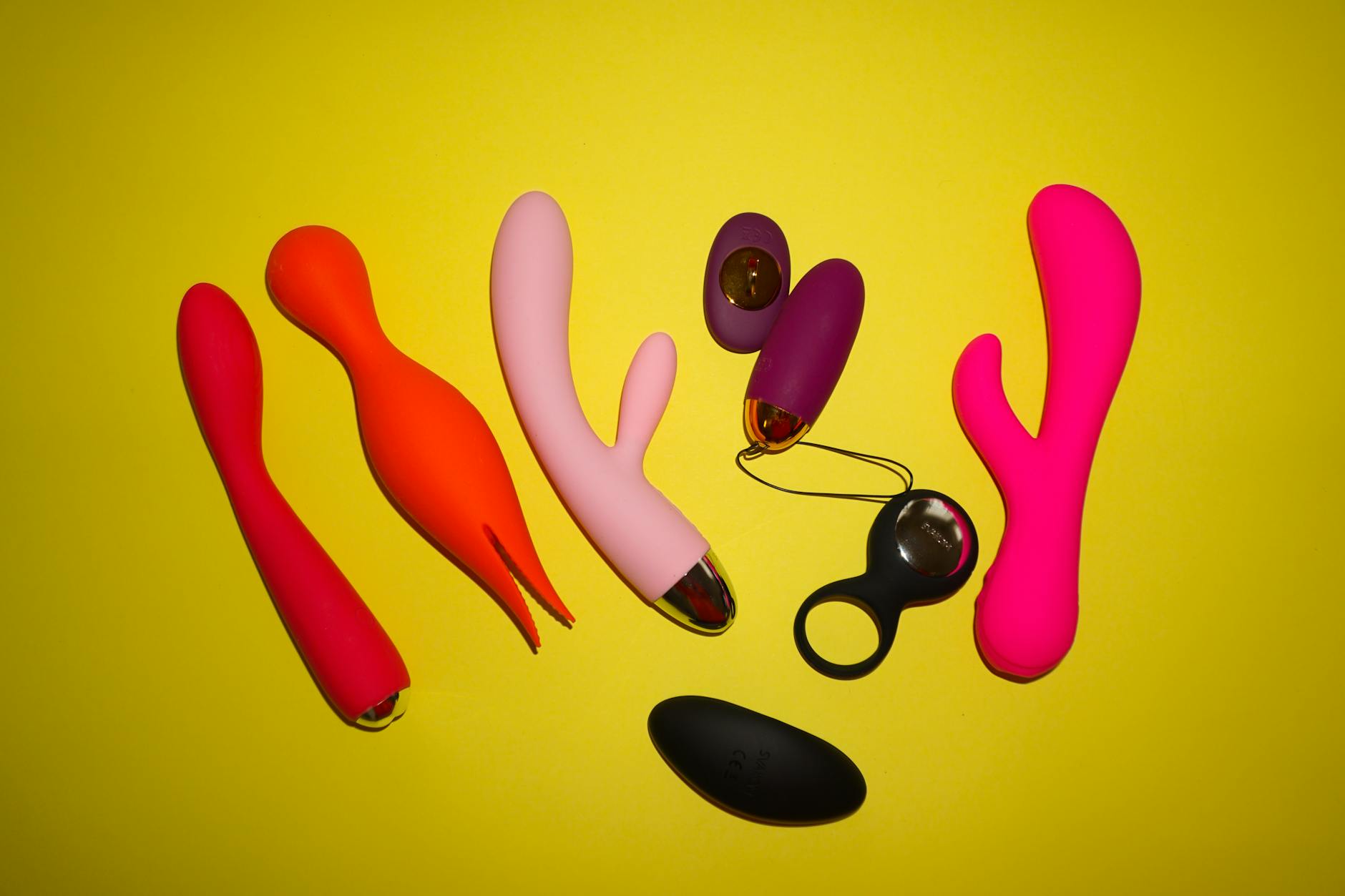
Photo by DRT.fm . on Pexels
The good news: once you understand your own anatomy, finding the right lemon vibrator becomes straightforward. It's not about trial and error. It's about knowing what to look for.
Map your own sensitivity first
Before you buy anything, spend time alone learning your geography. This isn't foreplay. It's reconnaissance.
Start with your fingers. Touch different zones: the glans directly, the shaft beneath the hood, the area just inside the vaginal opening, the perineum. Notice which touches create a response. Does one spot feel sharper and more acute? Does another feel diffuse and broad? Are you more reactive to direct pressure or to lighter contact? Does the hood need to be pulled back to feel maximum sensation, or does pressure through the hood feel better?
Write it down or record voice memos to yourself. Specificity matters. "Sensitive on the right side of the glans" is useful. "Fairly sensitive" is not.
If you haven't explored this way before, give yourself at least a week before you buy a lemon clitoral vibrator. Your body will teach you what it needs.
The shape question: pointed versus broad
Lemon vibrators and suction-style adult toys come in different tip shapes, and this is your first decision point.
Pointed or tapered tips (think classic vibrator shape) concentrate stimulation into a smaller area. These work brilliantly if your clitoris is relatively tucked under the hood or if you have a defined glans with a clear tip. The narrow contact lets you isolate exactly the spot that lights up. The trade-off: if your sensitive zones are spread across a wider surface, a point can feel like it's missing part of the picture.
Broad, flat tips distribute pressure across a larger zone. These suit people whose sensitivity is more dispersed, or whose clitoris benefits from contact with the entire glans plus some surrounding tissue. The broad contact also tends to feel less intense, which matters if you're sensitive to sharp stimulus or if you need a slower build-up.
Suction-style toys (like the Lem) take a different approach altogether. Instead of vibration alone, they use a pulsing suction rhythm. This mimics oral sex and engages the internal arms of the clitoris as well as the external glans. Suction toys tend to work well for people who feel more response with broad, wrapping sensation rather than a pinpoint buzz. They're also excellent if direct vibration on the glans feels too intense or if you want a more "whole clitoris" sensation.
Pressure intensity matters more than you think
Some lemon vibrators pulse at high frequency. Others use lower-frequency, deeper pulses. The difference is profound.
High-frequency buzzing (think a traditional handheld vibrator) creates a sharp, tingling sensation. It's excellent for people who want quick arousal and have relatively robust sensitivity. The downside: if you're prone to numbness or if your clitoris needs time to warm up, high-frequency can feel overwhelming or even deadening after a few minutes.
Low-frequency, deep pulsing (what many suction devices use) mimics a massage or rhythmic pressure. It builds sensation gradually and tends to keep your body responsive longer because it's not a constant assault on nerve endings. This style often works better for people with sensitive tissue, or those who find their pleasure response shuts down under too much intensity.
There's also pattern variation. A steady buzz is one experience. A pulsing rhythm that speeds up and slows down is another. Some people find that the rhythm matters more than the intensity. You won't know until you try.
Hood coverage and fit
Your clitoral hood plays a bigger role than most guides acknowledge. If your hood is pronounced, a toy designed for an exposed glans might feel like it's sliding around instead of making solid contact. You'd need either a toy with a wider opening to accommodate the hood, or a suction toy that creates a seal regardless of hood size.
Conversely, if your glans is fairly exposed, a suction toy with a very small opening might be uncomfortable because you have too much sensitive tissue trying to fit into it.
Before you buy, consider: when you're aroused, how much of your clitoris peeks out from under the hood? Can you pull the hood back comfortably, or does it stay fairly covered? This shapes whether you want a precisely sized toy or one with some flexibility.
Internal sensitivity and depth
Some of your most sensitive nerve tissue is not on the external glans. It's in the internal branches of the clitoris, which run several inches deep on either side of the vaginal opening. Some people have significant pleasure response to pressure or vibration near the opening. Others feel almost nothing there.
This matters because it determines whether you want a toy that stimulates only the external glans, or one that can reach into that deeper territory. Suction toys like the Lem tend to engage the whole system. Tapered vibrators might feel more external. If you know your pleasure is triggered by internal sensation, a toy that reaches there will feel transformative. If you're mainly external-glans focused, a toy built for depth might feel like wasted complexity.
Trial and error is not a failure mode
You might still get it slightly wrong the first time. That's normal. The point of understanding your anatomy first is that you'll make an informed wrong choice, which is much faster to course-correct than a random guess.
If you buy a lemon sexual toy and it doesn't land perfectly, you've learned something valuable about what you need. Maybe you discover you prefer suction to vibration. Maybe you realize broad contact feels better than pointed. Maybe you find that you actually do want intensity after all, contrary to what you thought.
Read the buying guide for lemon vibrators if you want a structured approach to narrowing down options. Or visit the FAQs if you have specific questions about toy features.
Start with what feels right, not what sounds impressive
The most powerful lemon clitoral vibrator is not the best lemon vibrator. The quietest one, the prettiest one, the one with the most patterns.none of those things matter if it doesn't match your body's actual needs.
Choose based on shape, pressure profile, and coverage. Everything else is secondary. Your clitoris is the expert on what it wants. Your job is just to listen to it first, then find the toy that reflects that answer.
FAQ: Clitoral anatomy and lemon vibrator fit
How do I know if I have a prominent or tucked clitoris?
Stand in front of a mirror when you're not aroused. Look at the area between your clitoral hood and labia. Can you see the glans poking out a bit? That's prominence. If you see mostly just the hood with no visible tip, your clitoris is more tucked. This matters because tucked clitorises often benefit from toys that can reach under the hood or that use suction to draw the glans out slightly, whereas prominent ones work well with more direct contact toys.
Does clitoral size affect which lemon vibrator I should choose?
Size itself matters less than sensitivity and the distribution of nerve endings. A larger clitoris isn't necessarily more sensitive. What matters more is whether your sensation is concentrated in one area or spread across the glans and surrounding tissue. Suction toys work well for most clitoral sizes because they adapt to your unique fit. Vibrators with adjustable intensity help if you're unsure about sensitivity.
What if my clitoris is asymmetrical or oddly shaped?
Totally normal. Most clitorises are asymmetrical to some degree. This actually argues for trying a suction-style toy first, because the seal adapts to your individual shape rather than forcing your body into a one-size-fits-all mold. If you prefer vibration, look for toys with a tapered or broad tip rather than highly structured shapes designed for a "typical" anatomy.
Can my clitoral sensitivity change, and do I need a different toy?
Absolutely. Sensitivity shifts with age, hormones, stress, medications, and relationship dynamics. A toy that felt perfect for years might feel too intense or not intense enough later. You don't necessarily need to replace it entirely, but you might need to adjust how you use it, take more time for warm-up, or experiment with different intensity levels. Read more about how sensation changes over time.
What's the difference between clitoral glans sensitivity and shaft sensitivity?
The glans (tip) often has denser nerve clusters and responds quickly to direct contact. The shaft (the body of the clitoris under the hood) usually prefers broader, slower pressure. If you're highly responsive on the glans, a pointed toy might feel amazing. If the shaft is your sweet spot, broad or suction-based contact will serve you better. Many people have zones of high sensitivity on both, which is why trying different toy shapes helps you identify your pattern.
Should I choose a lemon vibrator based on my partner's preference or my own anatomy?
Yours. Always yours. A toy that doesn't match your body's needs won't work well no matter who's using it. If you're choosing something you'll use solo, it's entirely about you. If you're choosing something for partnered play, it still needs to feel good for you. Your pleasure is not secondary. Get the toy that works for your anatomy and your partner adapts to that choice.
Is there a lemon clitoral vibrator that works for sensitive tissue?
Yes. Suction toys, when used at lower intensity levels, tend to feel gentler than vibration because the sensation is broader and less sharp. Water-based lubricant helps enormously. Starting at the lowest setting and building up is crucial. And honestly, sometimes a toy with adjustable intensity and a broad tip will feel less intense than a high-frequency vibrator, even if they're the same size.
Bottom line
You're not buying a toy. You're finding the tool that matches your body's specific wiring. That starts with mapping your own anatomy, not guessing based on generic advice. Once you know what you're working with, the right choice becomes obvious. And if you're still unsure after exploring, reach out and ask. Your specific anatomy matters.