
Let's talk about the thing nobody wants to admit
You want sex. Your partner doesn't. Or at least not as much, not as often, not in the way it used to be. And somewhere in that gap between your desire and theirs, resentment starts building. You're not broken. Neither are they. But the distance feels unbridgeable.
This is the most common relationship complaint I hear. Not infidelity, not lack of communication about money. Desire mismatch. And here's what most couples get wrong: they think a lemon vibrator is a workaround for the problem. It's not. It's a tool for solving the actual problem, which is almost never about orgasms.
Why desire drops in the first place
Before we talk about using a lemon clitoral vibrator together, we need to understand what's actually happening. Low libido in long-term relationships rarely comes from nowhere.
The usual suspects:
Stress and depletion. Work, parenting, financial pressure, health issues. When the nervous system is stuck in fight-or-flight, arousal doesn't show up. Your brain has already decided survival matters more than pleasure.
Emotional disconnection. This is the big one. If your partner feels unseen, unheard, or resentful, their body won't cooperate no matter how much they want it to. Desire is not rational. It's deeply tied to feeling safe and valued in the relationship.
Touch deprivation. Sounds counterintuitive, but couples with low libido often stopped touching altogether. Not sex, just touch. Hands on arms. Leaning into each other. When that disappears, the sensual circuitry powers down.
Medication, hormones, or health. Antidepressants, birth control, thyroid issues, menopause, low testosterone. These are real. Get them checked. But also acknowledge they're one piece of a larger picture.
Performance pressure. Your partner feels your desire. They feel the disappointment when they're not interested. Over time, sex starts feeling like a job they're failing at rather than something that might feel good.
What a lemon vibrator actually changes
A lemon clitoral vibrator like the Lem works for low-libido couples not because it magically restores desire, but because it removes pressure from the equation.
Here's the mechanism:
When your partner isn't naturally aroused, penetrative sex often feels uncomfortable or impossible. Entering the cycle of "I should want this but I don't" creates shame and shutdown. Introducing a lemon vibrator shifts the focus away from performance and toward sensation.
The suction technology on a lem vibrator also doesn't require the same kind of foreplay buildup that traditional sex does. Your partner doesn't have to be fully aroused for it to feel extraordinary. That removes one of the biggest mental blocks for people with desire gaps.
But here's the deeper piece. Using a lemon sexual toy together signals something critical: "I'm interested in what feels good for you, not just in reaching a certain outcome." That shift in attention is often the turning point in reconnecting.
The conversation you need to have first
Don't just surprise your partner with a lemon vibrator. That almost never goes well.
Instead, frame it like this:
"I've noticed we've drifted a bit, and I think some of that is on me. I've put pressure on things working a certain way, and I don't think that's helping either of us feel good. I found something I'd like to explore together, just for pleasure, no expectations. Would you be open to that?"
Then actually listen. Your partner might have concerns:
"Does this mean you're not satisfied with me?" (Translation: Do I still matter?)
"I don't know if I want to." (Translation: I'm scared, or I'm touched out, or I don't trust this yet.)
"I'm worried it will feel clinical." (Translation: Sex already feels distant; I don't want it to feel more like a project.)
None of these are rejections of the vibrator. They're information about what your partner needs to feel safe. Address that first.
For people with low libido, safety is everything. A lemon clitoral vibrator only works if the relationship foundation is solid enough to support it.
How to actually use it together without awkwardness
Start with a conversation about pleasure in general, separate from the vibrator itself. Ask your partner:
"When do you feel most relaxed? What kind of touch usually feels good? Is there anything I've been doing that makes you tense up?"
This isn't interrogation. It's curiosity. Your partner likely doesn't know either. Low-libido people often become disconnected from their own bodies.
When you do introduce the lemon vibrator, make it about exploration, not performance.
Set the conditions: Low light. Minimal distractions. Phone away. Plenty of time (at least 45 minutes; don't rush).
Start non-sexual. Let your partner hold it, feel the weight, see the design. Talk about it like you're trying something new together, not like you're fixing a problem.
Use it on yourself first. Honestly. Not as a performance, but as an actual expression of pleasure. Seeing you enjoy yourself removes the pressure from your partner. It signals that this is about mutual pleasure, not obligation.
Invite, don't push. "Would you want to try this together?" If they say not yet, that's not rejection. That's a timeline.
Combine it with non-sexual touch. Kissing, hand-holding, being close. A lemon vibrator works best when it's part of a larger context of intimacy, not a replacement for connection.
The weeks and months after
If the first experience goes well, you might try it again. You might not. Both are fine.
What matters is that you've opened a door. You've said, "Your pleasure matters and I'm curious about it." That shift in energy often does more to rebuild desire than any toy could.
Some couples find that using a lemon sexual toy together creates regular, lower-pressure sexual time. They know Wednesday nights are for trying things without expectation. That predictability and safety often restores desire naturally.
Other couples use it occasionally, or one partner uses it and the other is present and engaged. There's no one right way.
What you're watching for is whether emotional intimacy is rebuilding. Are you touching more often? Are conversations easier? Is your partner initiating non-sexual affection? Those are the real indicators that things are shifting.
When it's not about desire at all
Here's the hard part nobody wants to hear. Sometimes low libido isn't about low libido. It's about relationship health.
If your partner withdrew desire because you were critical, controlling, or emotionally unavailable, a lemon vibrator won't fix that. You have to fix the relationship first. That might mean therapy, might mean honest conversations about resentment, might mean a real commitment to changing patterns that broke trust.
A clitoral vibrator can help couples reconnect after that work is done. But it can't replace it.
Similarly, if your partner has depression, burnout, or an untreated health condition, introducing a toy isn't the solution. That's a medical conversation.
And if your partner has zero interest in any of this, including the conversation itself, that's information too. It suggests the desire gap is a symptom of a larger disconnection that needs professional help.
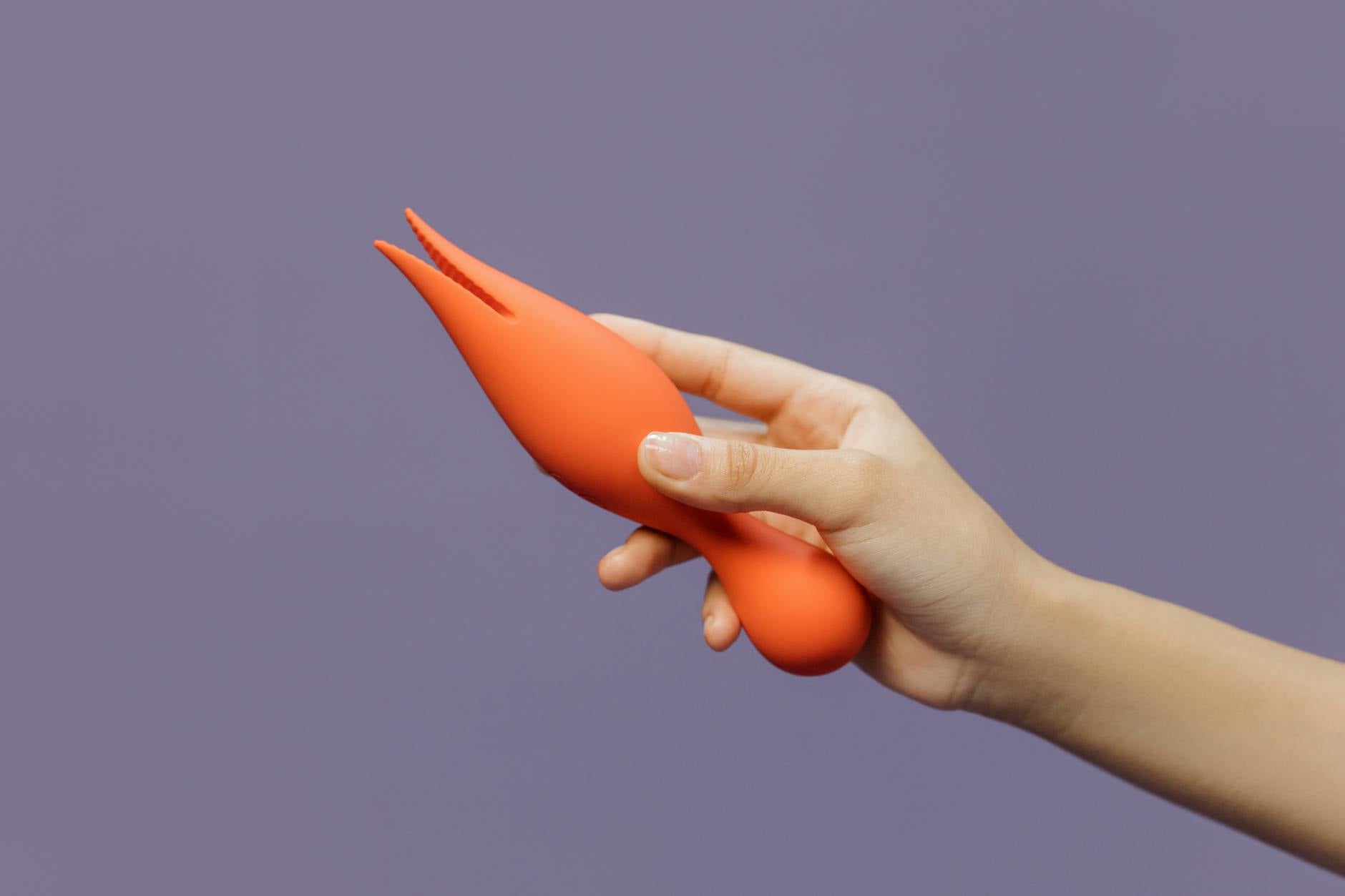
Photo by cottonbro studio on Pexels
The reframe that changes everything
Desire gaps feel like a failure. One person's body is saying yes and the other's is saying no. But what if you stopped thinking of it as a mismatch and started thinking of it as information?
Your partner's low libido is telling you something. Not always something you can fix, but always something worth understanding. Maybe they need more rest. Maybe they need emotional reconnection before physical. Maybe stress is genuinely preventing arousal and you both need to address that together.
A lemon vibrator, used well, is a conversation starter. It says, "I want us to feel good together, and I'm willing to figure out what that means for both of us."
That's often exactly what low-libido partners need to hear.
People also ask
Will using a vibrator make my partner feel replaced?
Only if you frame it that way. If you introduce it as "because you're not giving me what I need," yes. If you introduce it as "I want us to explore pleasure together," most partners feel the opposite. They feel wanted, not inadequate. The key is your tone and intention. You're building together, not substituting.
What if my partner thinks I want to use it instead of sex with them?
That's a legitimate concern and worth addressing directly. Say something like, "I want more of you and us, not less. I'm hoping this is something we do together, and something that makes the rest easier and more fun." Then actually demonstrate that by prioritizing partnered sex and touch outside of the vibrator context.
How often should we use a lemon vibrator if we're trying to rebuild intimacy?
There's no formula. Some couples do it once a week. Others once a month or occasionally. What matters is consistency and context. If you're using it as the only form of sexual contact, your partner might feel depressured but also increasingly disconnected. If you're using it as part of a broader intimacy practice, it works better. Think of it as one tool in a toolkit, not the whole toolkit.
Should I talk to my partner about what to do with the vibrator before we try it?
Absolutely. Ask what they're comfortable with. Do they want you to use it on them, or do they want to use it on themselves with you present? Do they want to build up to it or try it right away? Their answers tell you a lot about their comfort level and what you need to do to make them feel safe.
What if we try it and it doesn't help the desire gap?
Then it's information. It means the gap is about something else, and you likely need different support. That might be couples therapy, individual therapy for your partner, medical evaluation, or deeper relationship work. A lemon vibrator can help reconnect, but it's not a substitute for addressing the root cause of the disconnection.
Is there a best lemon clitoral vibrator for couples with desire gaps?
The Lem is designed specifically with couples in mind. Its suction technology doesn't require high arousal to feel incredible, which is useful for lower-desire partners. But any lemon clitoral vibrator can work if you're using it as a conversation starter rather than as a magic fix. The tool matters less than the intention behind it.
What actually rebuilds desire
Let me be clear about what I'm not saying. A lemon vibrator is not a couples' therapist. It's not a substitute for addressing resentment, rebuilding emotional intimacy, or treating underlying health issues.
What it is: a way to signal to your partner that you're curious about their pleasure and willing to explore connection in new ways. For many couples, that signal alone is the turning point.
Desire often comes after feeling wanted and safe, not before it. A lemon clitoral vibrator can create the conditions where both of those things feel possible again.
If you want to explore this together, start with the conversation. Not the vibrator. The conversation where you actually ask your partner what they need to feel desired again. Often the answer has nothing to do with sex and everything to do with being seen.
For more on rebuilding intimacy in relationships, read about how lemon vibrators help long-term couples reconnect or explore how to use a lemon vibrator with your partner for deeper connection.