Here's the thing about asking
You already know what you want. The problem isn't desire. It's the voice in your head that says asking for it makes you needy, demanding, or weird. Most people carry this quietly. In twenty years of working with couples, I've found that the gap between what someone wants and what they actually ask for isn't about compatibility. It's about shame.
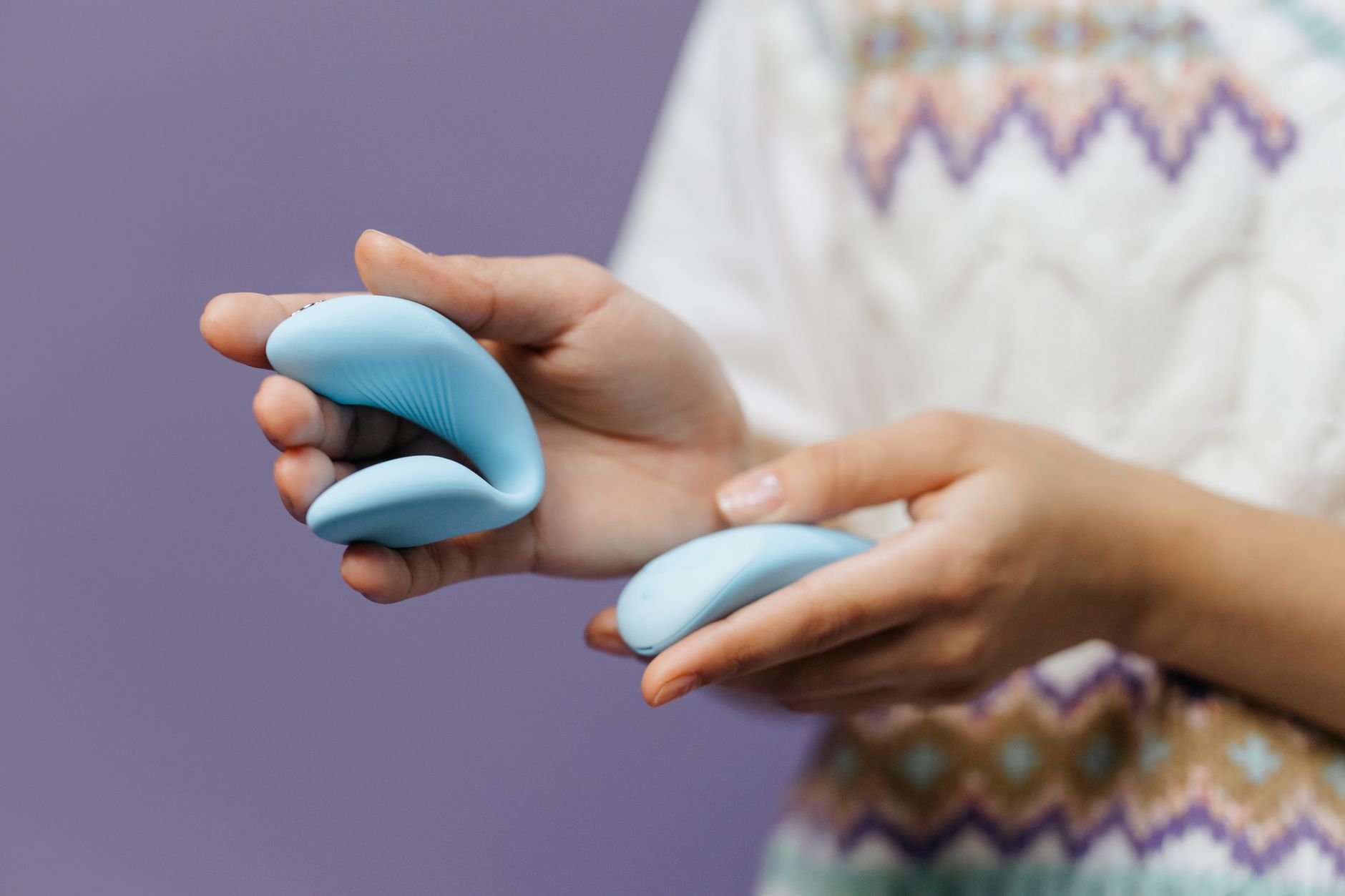
A lemon clitoral vibrator changes the dynamic in a specific way. It's not magic. But it does something that words alone often can't: it removes the performative pressure from your body and gives you space to speak up.
Why the shame is louder than the desire
You were probably socialized to believe that good sex happens spontaneously, that real desire doesn't need tools, and that asking for specific things makes you high-maintenance. None of that is true. But the belief is sticky.
Here's what research shows: people who use toys alone are more likely to know exactly what they want and to ask for it directly. The Lem vibrator or other lemon clitoral vibrators help you build a map of your own pleasure first. That map is what makes asking possible.
When you know the exact pressure, rhythm, and pattern that works for you, asking for it stops being vague and needy. It becomes technical. "I need pattern 3 on the Lem for about two minutes before we try anything else" is infinitely clearer and less vulnerable than "I don't know, just... something different."
The three layers of self-consciousness
Self-consciousness isn't one thing. It's usually three.
The shame about pleasure itself. You grew up in a world that told you women's desire is either dangerous or irrelevant. Asking for a lemon vibrator or any clitoral vibrator means saying out loud: "My pleasure matters." That's the first conversation, and you might need to have it alone before you have it with a partner.
The fear of rejection. What if they think you're saying they're not enough? What if it kills the mood? What if they say no? These are real anxieties, and they deserve real handling. A toy isn't a criticism of your partner. It's an addition. But your partner might not know that without being told.
The performance anxiety. Even with a partner who's enthusiastic, there's pressure to "use it right" or to orgasm on cue now that you have a tool. The Lem vibrator works well precisely because it doesn't require much technique. But the permission to enjoy it without outcome pressure is what you actually need.
How to introduce it without catastrophizing
Let's get tactical. Here are three approaches, from gentlest to most direct.
Approach one: solo first, no announcement. Use your lemon clitoral vibrator alone for two to three weeks. Get comfortable with the sensation, learn what you like, and feel the difference in your own body. You're building baseline confidence. When you eventually mention it to a partner, you're speaking from experience, not from a sales pitch.
Approach two: frame it around shared pleasure. "I read that using a toy can help me relax faster, which actually means more time together." That's true. The Lem vibrator often shortens the time it takes to be fully aroused, which means less performance pressure on both of you. This isn't manipulation. It's useful context.
Approach three: the direct conversation. Set it up outside the bedroom. Saturday morning coffee, not 11 p.m. foreplay. "I want to try using a clitoral vibrator with you. Not instead of you. With you. I'm nervous about asking, but I'm more nervous about not asking." That honesty lands harder than any script.
Whichever you choose, the key is separating the asking from the trying. Tell your partner before it's time. Give them time to process. Answer the question they're actually asking ("Am I enough?") even if they don't ask it out loud.
What to actually say (and what not to)
Here are real sentences that work. Steal them.
What works:
- "I want us to try something that I think will feel really good for me. I got a lemon vibrator to use together."
- "I've been exploring what works for my body, and I want to share that with you."
- "I'm asking because I trust you, not because something's wrong."
- "My pleasure is part of our pleasure. Can we try this?"
What doesn't:
- "I guess we need to spice things up." (implies boredom, implies blame)
- "This is something I saw online and thought we should try." (depersonalizes, suggests it's external pressure)
- "You're not making me come, so..." (frames it as a failure, puts them on defense)
- "I know you won't want to, but..." (pre-rejection, invites resistance)
The difference is agency. You're not apologizing for wanting pleasure. You're not framing it as a fix for something broken. You're saying: this is part of me, and I'm inviting you into it.
The lemon vibrator as a conversation tool
Here's what happens in the body when you use a clitoral vibrator with a partner: your arousal becomes visible. You're making sounds, moving, responding in real time. That takes the pressure off them to guess.
Most sexual dysfunction in long-term relationships isn't about desire. It's about communication collapsing. The person gets tired of guessing. The other person gets tired of feeling inadequate. Both people start avoiding sex, which feels safer than failing again.
A lemon clitoral vibrator interrupts that pattern. Instead of "Does this work?" becoming a source of shame and silence, it becomes: "Here's what works. Here's what I need. Can we build from here?"
Use the toy as a teaching tool. Let your partner watch what makes you respond. Let them hold it sometimes. Let them choose the pattern while you guide them. This transforms it from a toy that replaces them into a toy that deepens communication.
When your partner resists
Some partners will. Here's why, and what to do about it.
Most male partners worry that a vibrator means they're being replaced. Most female partners worry that suggesting a toy makes them seem unappreciative or high-maintenance. Some partners are just uncomfortable with anything that feels new.
None of these worries disappear because you explain the toy's mechanics. They disappear because you stay patient and because you make it safe to change your mind. If your partner says no, don't push in that moment. Say: "Okay. I needed to ask. Let's talk more about this when we're not in the middle of things."
Then have that conversation three days later, outside the bedroom. Ask what they're actually worried about. Usually it's not the toy. It's something about vulnerability, inadequacy, or change.
If you've asked clearly and your partner consistently refuses, that's useful information about your relationship. It might be worth exploring with a therapist together. Pleasure shouldn't be a source of shame or control.
After the conversation, before the toy
Once you've asked and they've said yes, don't jump straight to using it. Ease in.
Try it solo first together. They watch. No pressure to perform. Then they hold it and you guide their hand. Then they use it on you while you're touching yourself. Then it becomes part of your regular rhythm.
This gradual approach does something important: it separates the emotional work (asking, being vulnerable, starting something new) from the physical sensation. You're not trying to have a breakthrough orgasm while also managing the anxiety of asking. You're just slowly normalizing the presence of a lemon vibrator in your intimate life.
Use the Lem or another lemon clitoral vibrator on lower settings at first. Let it feel good without it feeling like the main event. The point is integration, not spectacle.
The pleasure permission that follows
Once you've asked for what you want and someone has said yes, something shifts. You stop waiting for permission to be happy. That permission becomes internal.
You'll notice it first in small moments. You'll ask for the pattern you want without apologizing. You'll suggest positions that serve your pleasure, not just your partner's. You'll take longer warm-up time without feeling guilty about it.
That cascade starts with a single request. It starts with using a lemon clitoral vibrator and saying: "This is what I need."
Frequently asked questions
How do I bring up a toy if I'm worried my partner will think I'm cheating?
You separate the toy from the person. A clitoral vibrator is a tool, not a replacement. The easiest way to convey this is to frame it together time, not solo time. "I want to try this with you" is different from "I want to use this instead of you." If your partner still interprets it as cheating, that's a signal that communication has broken down more broadly. That's worth addressing separately, possibly with a couples therapist.
Can I use a lemon vibrator without telling my partner?
Technically yes. Realistically, they'll find out, and then you've created a trust issue on top of the intimacy issue. It's harder to come back from "You hid this" than "I was nervous to ask." The asking is the point. That's where the relationship deepens.
What if they want to use the toy but I'm the one who's self-conscious?
That's actually common. They might want to explore together and you're the one carrying shame. First, get comfortable with your own body and the Lem vibrator or lemon clitoral vibrator alone. Build your own baseline of pleasure. Then let them participate. You don't have to perform. You just have to show up and let yourself feel good. That's brave enough.
Does using a lemon clitoral vibrator make me dependent on it?
No. Your body doesn't become dependent on a toy the way it becomes dependent on a substance. What happens is you learn what feels good, and then you want that feeling regularly. That's healthy. You know your preference and you can ask for it. That's communication, not dependency.
How do I know if I'm asking too much?
You're asking too much when your partner says they can't or don't want to. You're asking the right amount when both people can say yes or no freely. If you're afraid to ask because you think it's "too much," that's your shame talking, not reality. Ask. Let them answer. Adjust from there.
What if my partner suggests the lemon vibrator first?
Then receive it as a gift. Some partners are curious and want to explore. Some are relieved not to have to guess anymore. Some are offering connection. Whatever the reason, let it land as: "They want to know me better." That's the whole point. The direction doesn't matter as much as the openness.
The real shift
Asking for pleasure is an act of trust. It means believing that wanting something doesn't make you bad. It means believing that your partner can hear you and still love you. It means believing your pleasure is worth the risk of asking.
A lemon clitoral vibrator doesn't create that belief. But it does give you a concrete thing to point to. It says: "Here is my desire. Here is what I need. Here is me, asking." That sentence, spoken out loud, changes the relationship. Not because of the toy. Because of the asking.
Your pleasure matters. Asking for it is the first step to having it. Learn more about building intimacy in long-term relationships, or explore what happens when partners have different arousal speeds. Both conversations start the same way: with honesty.